“I need an ambulance”, is what I planned to say, but didn’t. Sometimes, the best ideas in life come in a flash. In that brief interlude between hearing the operator’s voice and opening my mouth to speak, I was struck by a thought that changed my life forever, and threw me in prison.
“I need an ambulance”
In 2008, I was charged with the first-degree murder of Charlene Smith, a street walker in her early twenties. The jury was unanimous in their ‘guilty’ verdict and I got a life sentence.
Life before prison was filled with trivia. Facebook notifications, Tweets, WhatsApp forwards, emails, text messages, movies on demand, 24-hour news, serials I had to watch … intruders who came in to my life as polite guests but soon became masters. I was unable to concentrate on anything. My mind was a monkey jumping from tree to tree. I had the attention span of a moth.
I have spent the last ten years in prison, mostly in solitary confinement. I was not allowed to have a phone or connect my laptop to the internet. In these ten years, I have completed my life’s work. I have written the trilogy that I only dreamed of writing all my life. I have read all the books I wanted to read. I think I am now ready to demand a retrial and prove my innocence.
Prisoners exercising by Gustav Dore/ Van Gogh. Photo taken by Gopi Chandroth.
So, what’s the story? I was walking home one evening after a particularly unproductive day at the office. It was late January, and as I negotiated the icy patches on the streets of Soho, I lamented the futility of my life and I knew that I had to change my life if I wished to continue living. I entered a quiet service lane without shops or cafes.
As I reached halfway down the street, I saw a young woman lying motionless on the street. Instinctively, I ran to help her and saw she had been stabbed. Her blood gushed out and formed little rivulets on the tarmac turning the ice on the street, crimson. The smell of cheap perfume melded with that of fresh blood.
As I looked around in panic, I saw someone – a man – running away. I wanted to help her and the first thing I did was feel her pulse. She had none. Her eyes were wide open, the pupils dilated and fixed and she wasn’t breathing. I knew she was dead and I could see she had a kitchen knife buried deep in her chest. I reached for my phone and dialled 999.
In case I had forgotten, I am reminded. I am back in Delhi, the city of my childhood. “Be careful”, cautions Maya, the caretaker who I had known as a young school girl and is now a mother of three daughters in their twenties. Two of Maya’s front teeth are missing, like absent milestones of time, marking the passage of some 40 years. “Be careful of the dogs, big brother”, she warns me.
I go to the balcony and look outside. Hordes of stray mongrels roam the streets. Some have colourful winter coats on. Occasionally, they settle some canine scores with sporadic fights, but are peaceful on the whole.
I need to withdraw some money. As I open the gate and step outside the apartment building, the younger of the three chowkidars (security guards), asks me, “Where are you going, big brother?” A direct question, which anywhere else in the world would have been considered too direct. “To the cash machine”, I reply because I know his question is only a preamble to providing me with some unsolicited, but free advice. With a look I couldn’t quite place and a nod that said “Wait, don’t go away”, he disappears behind the building. He brings me a staff, roughly the size of a walking stick.
“If you keep this with you, the dogs won’t bite”, he said handing me the staff. “Hide it when you see the black and white dog,” the second chowkidar cautions, “she attacks people with sticks”. Resembling a biblical shepherd, I venture out. I see some dogs sleeping on the roof of parked cars, and some under them. I walk tentatively, stick in hand to ward off dogs who are afraid of sticks while scanning the streets for the vicious black-and-white dog who would attack me, for carrying one. I return home without incident and sleep off my jet lag.
I wake up to a clamour outside. A good Samaritan has come to feed the stray dogs, but a local resident objects and they argue loudly. Several others join in and soon it is a full-blown shouting match between the pro-dog group (dog-walleh, as Maya calls them) and anti-dog group. The dogs gather around and watch curiously. They are silent as if not wanting to add to the racket. A man tilts his head sideways at a black-and-white dog, not daring to point at her directly. “She has bitten 24 people so far”. She wags her tail at those who dare glance in her direction. Who? Me? Bite? Never!
I don’t find out who wins the argument. My friend arrives to take me for dinner. He explains the reason for the proliferation of dogs in Delhi. The government minister in charge of animal welfare has banned the killing of stray dogs. Her solution is to neuter them. My friend tells me how everyone drives, even two houses down the road, because of their fear of being bitten. That is, everyone who can afford a car, not the little people.
The little people, he adds in parentheses, include maids, chowkidars, drivers, cooks, gophers, ironing people, vegetable sellers, gardeners, hangers on, and visiting relatives of the little people. I remind him I am no foreign tourist and have grown up in Delhi. I know who the little people are and why they remain little. I am incensed by the social disparities in my native land, I tell him. “Ok, ok! Let’s stick to dogs”, my friend stops me midstream.
I conclude day one. Lots of running around, more wise counsel than I could shake a stick (staff) at, broken promises, circular arguments and dog fights. And, a fight about dogs too. Yes, I am home!
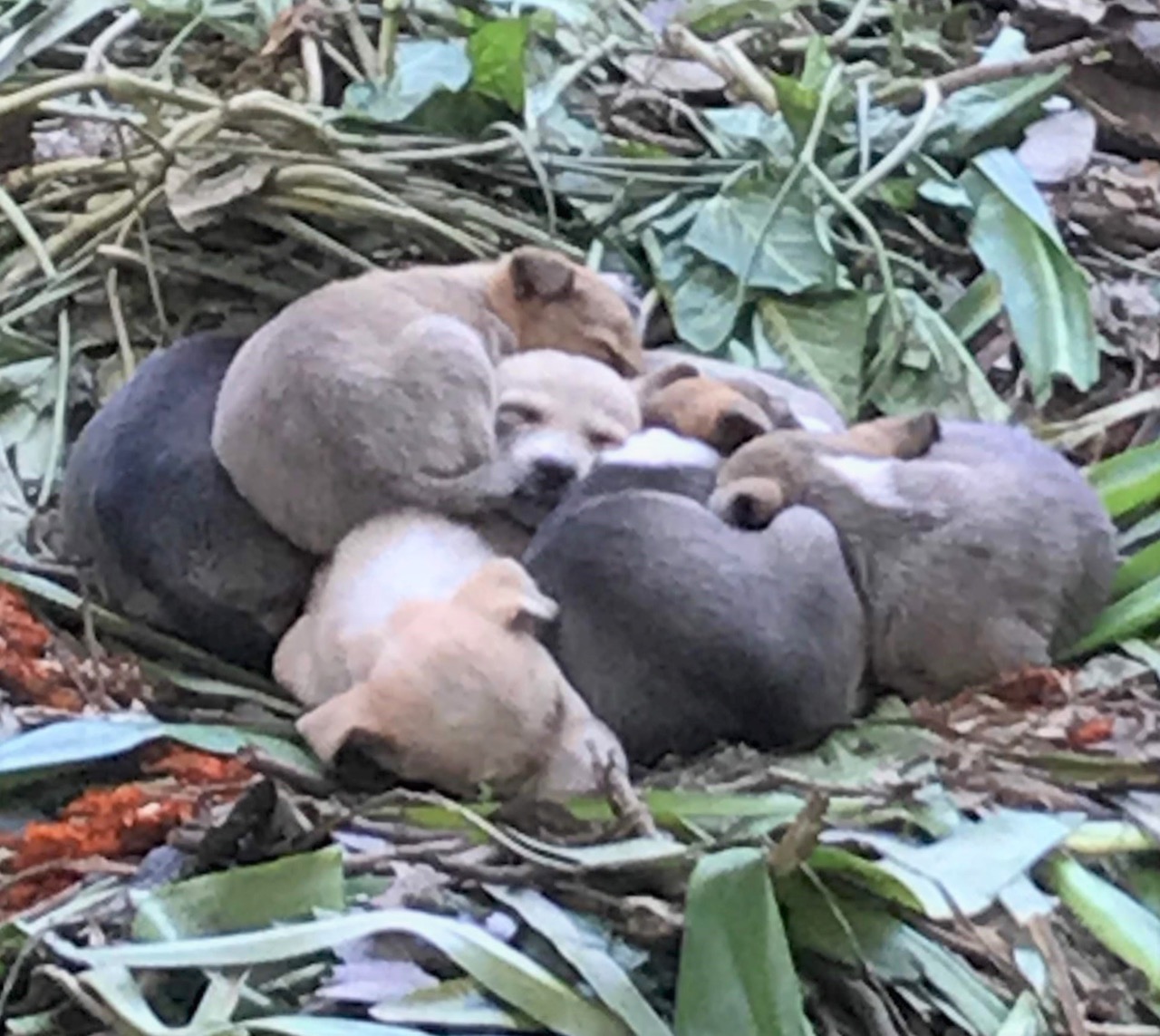
My wife and I are back in Delhi some three months later. Nothing has changed. The sterilisation programme seems to be effective; well, almost. I see a litter of six pups in the community garden opposite our apartment. They appear hungry and cold, and sleep on top of each other for warmth. Tiny heads, paws and tails poke out from the ball of dogs inflating and deflating as they breathe. They could be an art installation at Tate Modern. I hear horror stories of an entire litter being run over by a car causing the heartbroken black-and-white mother to bite passers-by. It is too horrific to even imagine and I console myself it is a fabricated tale.
My wife, devoid of any fear of dogs, strokes their forehead and talks to them. She refuses to carry a stick. The deadly black-and-white dog seems to have changed her character or is just overwhelmed by the kindness. Her brown eyes smile. She nuzzles up to my wife wagging her bushy tail in grateful appreciation.
Some dogs are allowed into the dog-wallehs’ homes to spend the night but are ejected at daybreak so as not to upset the anti-dog- wallehs. A passer- by stops and talks to one of them. It sounds like he is cooing to a baby. The dogs continue to be fed, surreptitiously and in darkness.
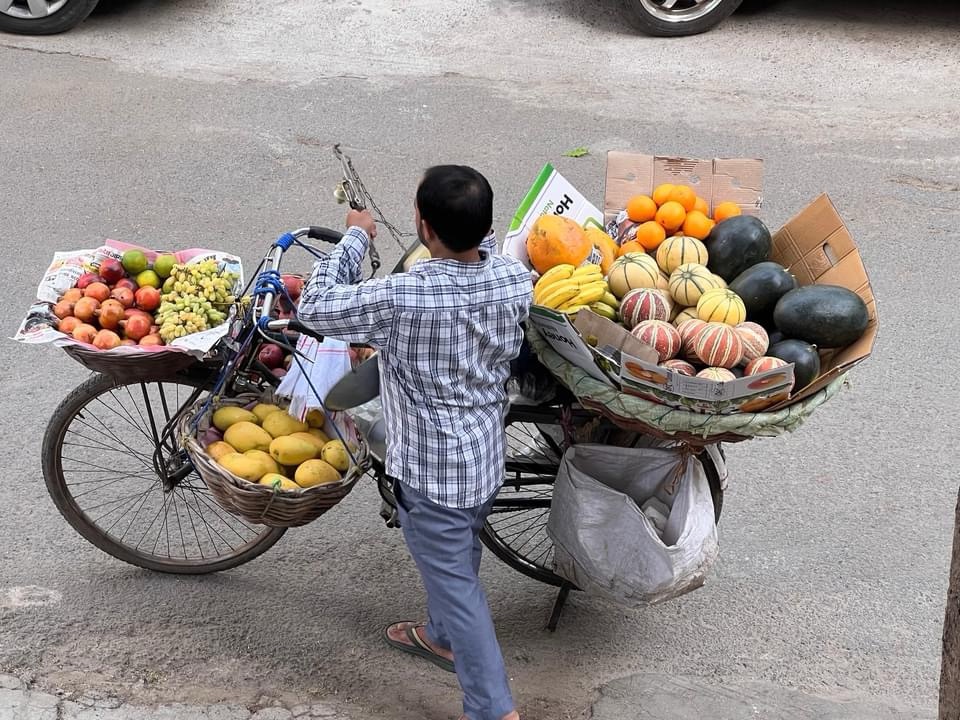
There is an NGO (non-governmental organisation) who takes care of their welfare. They are funded by a section of the community who believe that the first chapatti of the day should go to the cow and the last to the dog. At every nightfall, a young employee of the NGO arrives on a bicycle laden with tiffin carriers. He lays down newspapers at the side of the road to feed them rice and chicken. They are happy and come alive, energised by the meal. My sleep is punctuated by their collective barking. Their synchronised moan makes me uncomfortable and I pull my blanket over my head.
The sound of the chowkidar’s bamboo staff crashing on the tarmac every few minutes, and the piercing screech of his whistle transport me to my school days. ‘I am awake. I am alert’, is his message to thieves and other undesirable elements of the night. The dogs sleep, probably dreaming of warmth and food. They don’t do him the courtesy of opening their eyes. It is the Delhi I know. Nothing has changed, yet nothing feels the same.
Day breaks. A chauffeur, bored of waiting for his employer to emerge from his mansion, goes around beating random dogs with a stick. He has a sinister smile on his face and the dogs yelp in surprised pain. I scream at him from my balcony and ask him how he would feel if I were to go down and beat him with a stick. His wanton cruelty is exposed and he is embarrassed. His brief illusory world of a tiger-hunting Maharaja is shattered. He drops his stick. I go and cry in the bathroom.
Like everything in the country of my birth, things are not as they appear to be. There are layers of meanings to everything. Every story recounted has a moral, but their complexities confound linear analysis. Before long someone will build a shrine, on our street in Delhi, dedicated to a black-and-white dog. Truth and myth will merge and dog-wallehs and anti-dog-wallehs will pay obeisance to her, ring a bell and say a prayer. Of this, I am certain.
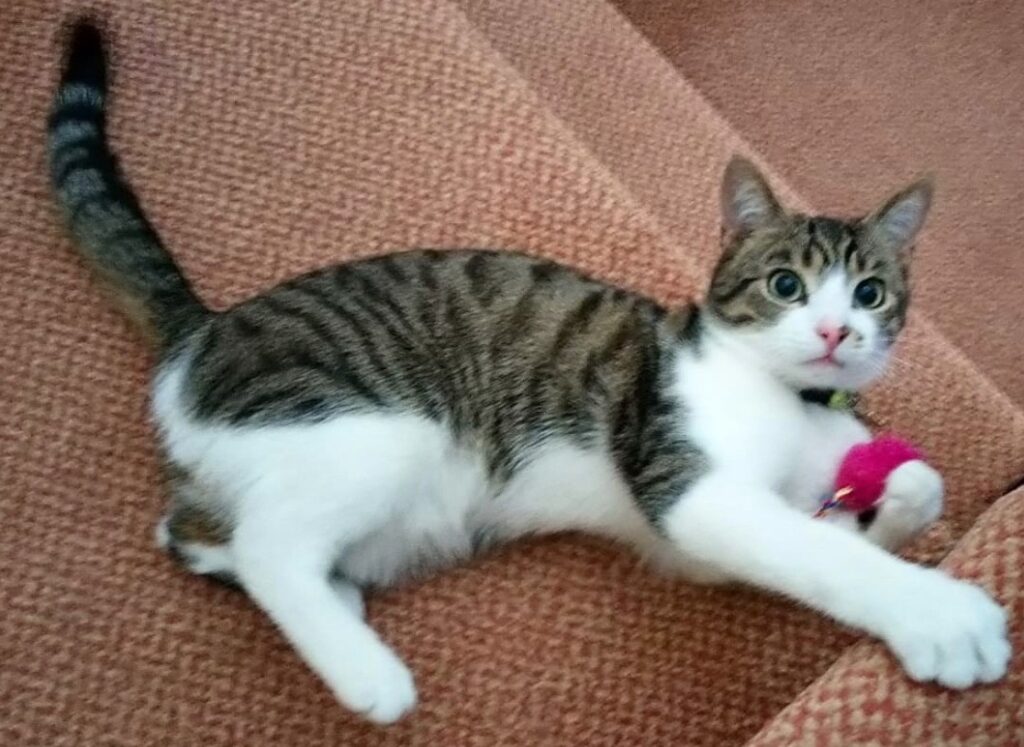
I owe an apology to Sonny. On my evening walk yesterday, I saw him halfway to Tesco, looking lost and forlorn. An elderly couple was engaged in conversation with him. He was instantly recognisable: a mix of tabby and white with tortoise shell grey, playful kitten approaching full cathood, no collar, and slight to moderate belly. It was your cat and he was lost.
Sonny
Sliding my headphones off, I said to the couple,
“It’s my neighbour’s cat”.The assertion must have come across mildly belligerent, for the couple quickly moved away.
“Sonny, what you doing here? Go home”, I chided him.
He responded by rubbing his head against my trousers. This was typical Sonny behaviour. The cat’s identity was confirmed without doubt.
I then uttered the magic words you had told me about when we last discussed Sonny: “Food, Food”. The hope was he would then follow me home. But he didn’t respond and, in fact, looked rather cross. He probably resented anyone other than his owners speaking the magic words. This was turning out more difficult than necessary. I made a couple of quick calls to both you and Doreen but they went straight to your voice mails.
The next step was brave and, in hindsight, foolishly Quixotic. Laying down an empty shopping bag on its side and holding it open like a cat flap, I pleaded with Sonny to get in. Passers-by looked on with amusement. Some even rolled their eyes but didn’t interfere. They probably thought it was a matter best left between a man and his cat. Sonny gave me a look like I have never had from anyone, let alone a cat. It was one of undisguised contempt and disdain, roughly translating to,
“Are you real?”
Are you real? (Illustration Hari Gopinathan)
Thinking about it now, there was no way any cat would have willingly walked into a bag. But at the time it seemed a good idea. I inched the bag closer, mentally assessing the risk of my intended actions. Having been immunised against rabies after a dog bite last year, I was quite sanguine about a potential animal attack. Just then an approaching dog barked and Sonny, who (I thought) was nearly in the bag, bolted. I ran after him, bag in hand.
“Sonny, Sonny, stop. Please.”
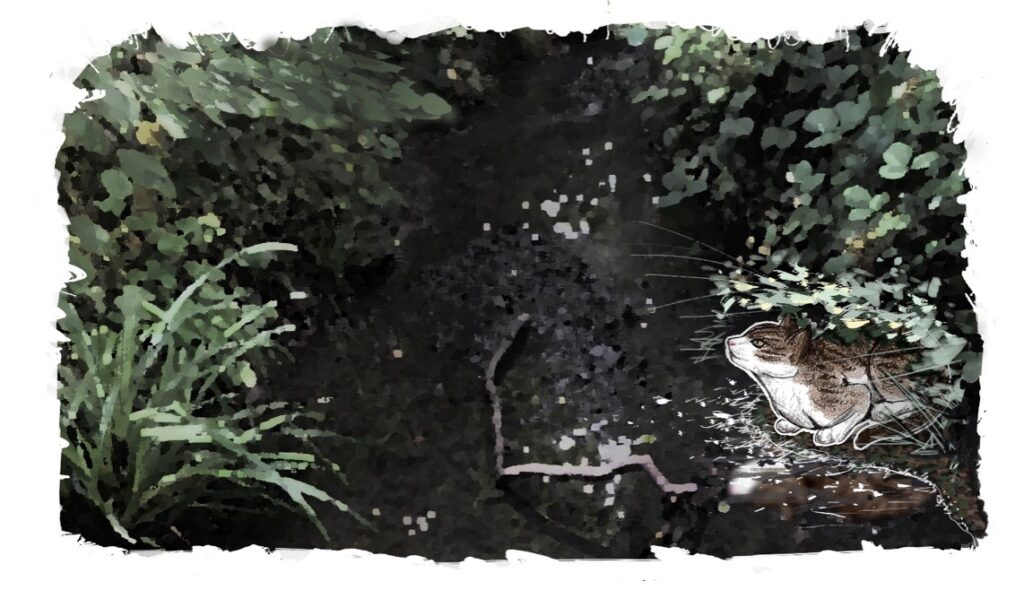
Finding him behind a bush in Monk’s Brook, I walked on to the precarious looking bridge. Whipping out the phone, I called our mutual neighbour Angela and switched to video mode. She confirmed it was indeed Sonny. She agreed to knock on your door and alert you that your dear pet was hiding in the brook, half a mile away.
Sonny hiding behind a bush (Illustration Hari Gopinathan)
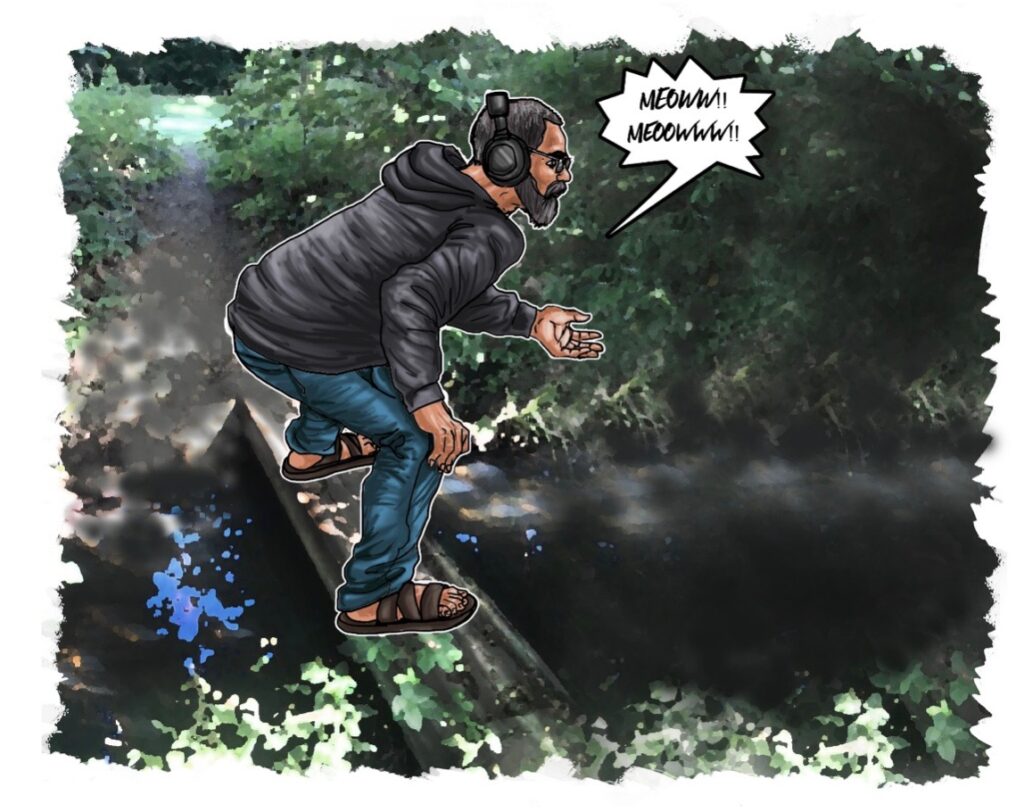
Meanwhile, I decided to hold Sonny’s attention and not let him out of sight. Whistling, meowing in several different tones ‘Meeeow’, ‘Meooow’, ‘Meowww’, and chanting the magic words ‘Food Food’ in the exact intonation you had demonstrated. I balanced dangerously on the bridge. Sonny wasn’t having any of it and stayed well away. This continued for a few minutes as I stood there waiting for someone to call me and resolve the situation. There we were, man and animal, locked in an endless stare-down. The benevolent rescuer of a lost pet and a cat minding his own business until I came along.
The playlist on the phone started playing Jimi Hendrix and almost instinctively I repositioned my headphones over my ears without losing eye contact with Sonny. I continued my meowing and cajoling not realising that I was compensating for the volume of Jimi’s guitar. I was shouting. A small crowd began to gather, seeing this man with a black hoodie and an unruly beard imitating a cat at full throttle while balanced on a dodgy bridge. It didn’t help they couldn’t see the cat.
Imitating a cat at full throttle (Illustration Hari Gopinathan)
The expected phone call never came. Sonny, bored with the staring game, leapt across and disappeared into the industrial estate on the other side of the brook. After some feeble attempts to follow him, I gave up on the rescue mission. I felt for you and Doreen while continuing the evening walk, burdened with guilt and disappointment. In my mind, I was already helping you post notices about your missing cat.
Looking at the phone on reaching home, I saw two missed calls and a message from Angela, “Paul’s cat’s at home. Enjoy your walk!”
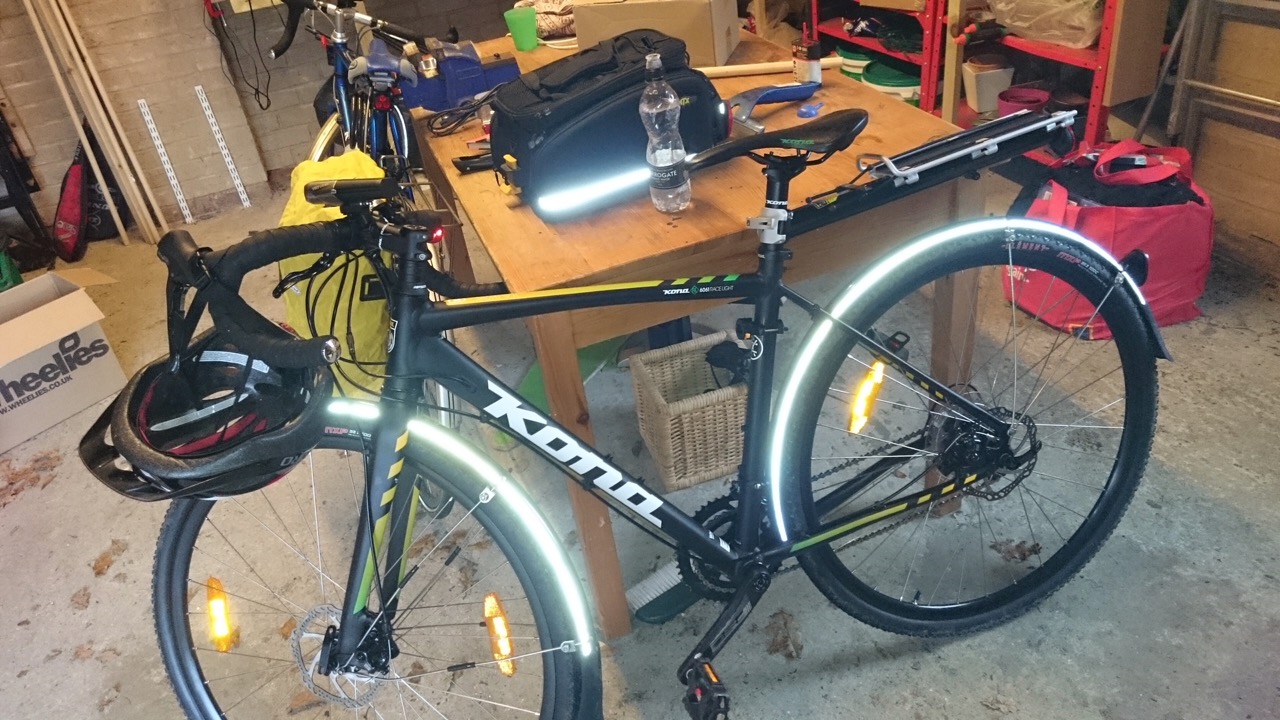
Hope you are enjoying my bike or parts of it that you couldn’t sell. If you’ve sold it in the nether market, the money must have bought you a few pleasures. But, I am straying from the point now, digressing, if you understand the word. That was no aspersion on your education, but just a thought that occurred to me. In your profession, you cannot afford to digress. You cannot head for the bike shed with your chain cutters and suddenly entertain an alternative thought, like “Let me check out the Magnolia tree. Its blossoms are so overwhelmingly beautiful this time of the year”. No. You will be the master of concentration, one-track minded, a Zen of bicycle thievery.
I am being given a replacement bike, having won long and tedious arguments with the insurance company. I really wished I had your phone number because the insurance wanted a photograph of the stolen bicycle and I could have asked you to text me one. You could have been part of the photograph, complete with your hoodie masking your ugly face. I am assuming you have an ugly face because your hoodie would be doing you a double favour then, wouldn’t it? Granted, some thieves are good looking. But they are way above your league. They wear ill-fitting Saville Row suits, crocodile skin shoes and millstone necklaces. They don’t steal small things like bicycles, they steal an entire nation.
I meant to ask before I placed my order for the replacement bike: would you like a mountain bike or a cyclo-cross or a road bike? I mean, it is better you state your preference now because the last two bikes I provided you were obviously not good enough. Would you prefer one of those folding bikes? Much easier to steal, but sadly, like guide dogs, they are allowed inside office buildings. So, you are screwed there. Anyway, let me know. Would you like lights as well and some mud guards? I hate spinning muck off the road onto my clothes and going around as if I had been lashed for some heinous crime I hadn’t committed.
Oh, by the way – the police are not interested. Looks like they have struck bicycle theft off their list of crimes. So, continue to steal without fear, with impunity. In fact, I am seriously considering your profession. It is nearly risk free. Very little effort required. As long as I put my black hoodie on and don’t smile for the CCTV cameras, I am sorted.
“The last two bikes I provided you were obviously not good enough”
‘See, it could be anyone’, the police said. ‘We don’t have a camera pointing directly at the bike shed’, our building security said. ‘My neighbour’s £3,000 bike was stolen just the other day,’ my boss said. It was supposed to make me feel better. After all, my bike was only worth a third of that. Never mind. Like they (I) say, look beyond words, look at intention. Please don’t think I am number dropping to wind you up or to make you feel you have wasted your efforts on a cheap bicycle when there was a much better one for the picking or, dare I say, unpicking? I am telling you all this with an ulterior motive. Read on, I have a plan.
‘You have an excess of £250’, the insurance company said. ‘Collect it from my thief’, I responded. I couldn’t quite figure out why the line went dead after that.
You won’t believe this. The insurance company was offering me a bike which was 30% cheaper than ours. I hope you don’t mind my using the possessive plural here. The least you can do is share the ownership with me, at least on paper. Granted, you own it now. But we didn’t exactly sign an ownership transfer form like the DVLA’s V5C. In fact, this could be a good business model, come to think of it. Knowing that the police, the building security, and everyone else that matters don’t really care, it’s something worth thinking about. Yes, this idea is developing legs (I wanted to say wheels, but then you stole my wheels, didn’t you?)
I have a plan for you – to my bike thief.
Do you offer any training? Have you got a website on the dark web or a YouTube channel? If you don’t, start one now or publish an instruction manual. ‘How to steal a bike from idiots for idiots”. See, I even got you a good catchy title. Seriously, shall we start a partnership? I could be your frontman. Your agent, so to speak. You give me a percentage for every bike you steal, and I give some of that to the insurance company to pay for the excess. Now that would really work.
Anyway, enjoy my bike if you still have it. Do not worry if you’re getting tired of it and are ready for a change. A brand spanking new one is on its way. Yes, the locks will be stronger this time. But hey, like they say, locks are for gentlemen.
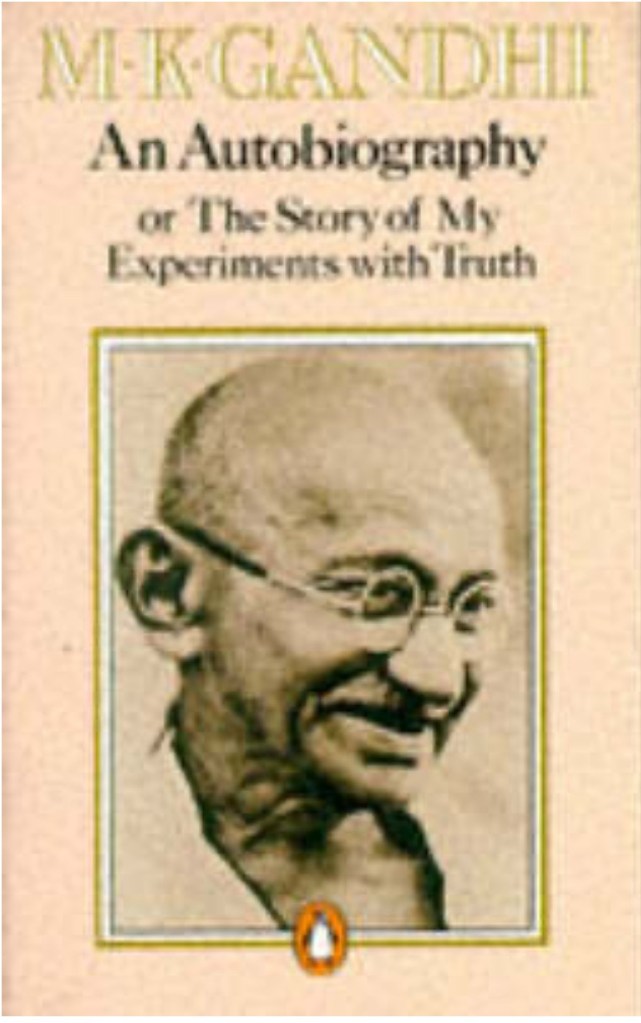
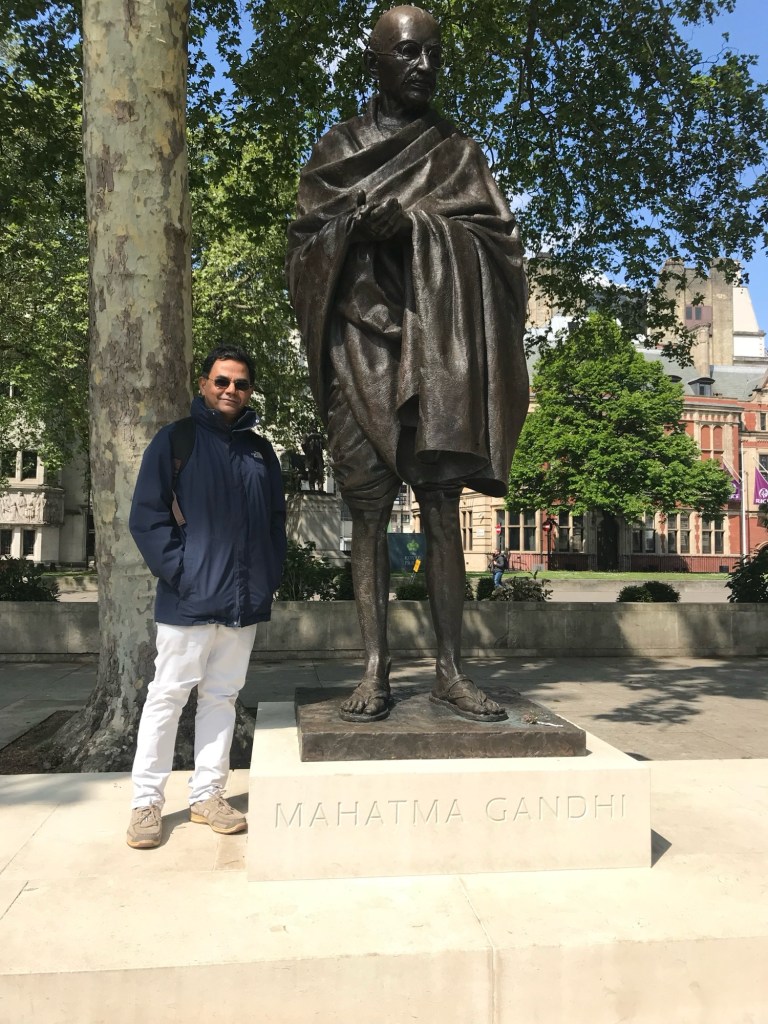
Boris visits india. He flies straight to Gujarat, the state where Gandhi was born. He wishes to strike lucrative deals, now that he is not shackled by the European Union. He visits Gandhi’s Ashram on the bank of Sabarmati. (He has not moved with the times. He doesn’t know Gandhi is not in fashion anymore.) They present him Gandhi’s autobiography, ‘My experiments with Truth.’ “Jolly good,” he says. Then adds, “Cor blimey! I too must write such a book.”
You died 30 years ago. Who knows where death takes us? Suspending disbelief on matters of the afterlife, let me say thanks to you on Father’s Day on the off-chance that somewhere lurks the spirit of our loved ones.
You taught me how to see the funny side of life, how to remain honest despite temptations to be otherwise. By your decent living you showed me how easy it is to be decent. But above all, you taught me the art of story telling: how to narrate a tale with a terrific punchline, how to keep the audience guessing and curious about the potential outcome.
Although you lacked the thrift that you tried to inculcate in me, you did warn me about the potential consequences of the profligacy of my youth. You told me that if I didn’t think of my financial future, I would end up with nothing but a load of empty boxes in my old age.
For years you made me write a one third précis of the daily newspaper editorial and corrected my language despite your busy schedule. You inculcated in me the pleasure of reading, the passion for literature. You bribed me 100 rupees to read Mahatma Gandhi’s autobiography when I was just fourteen!
So thanks for everything. I couldn’t have asked for more.
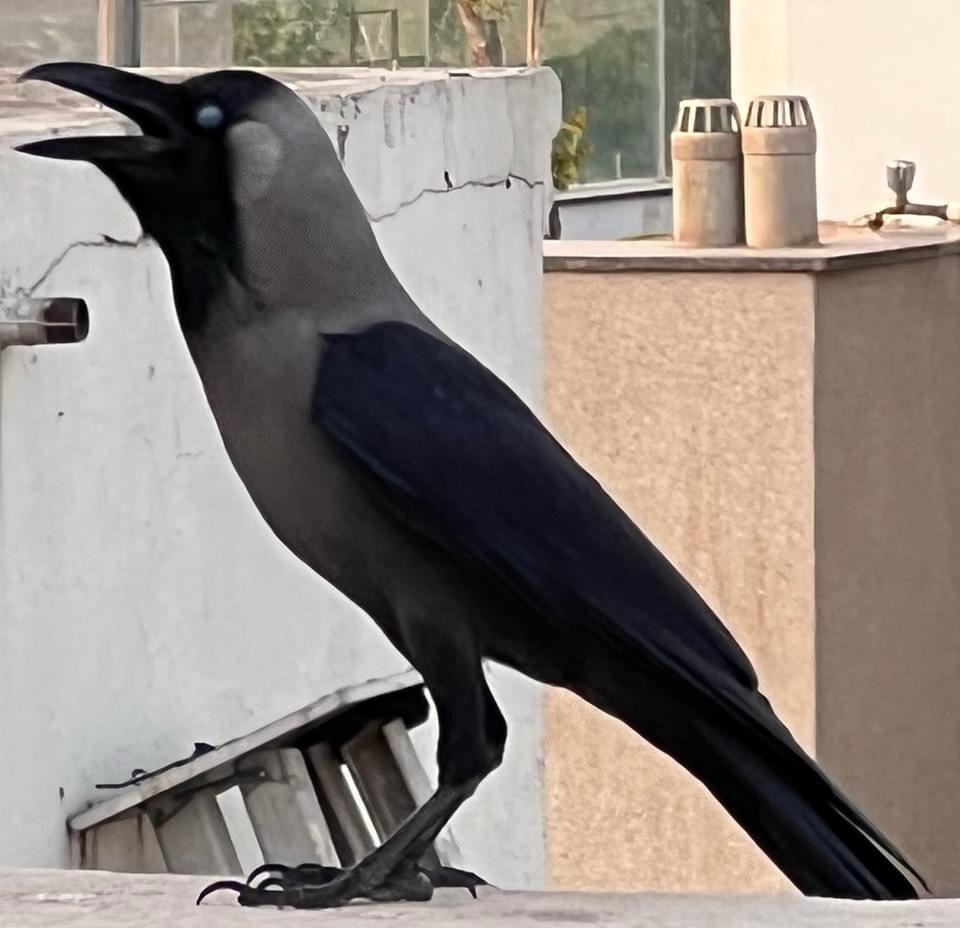
The crows start at the break of dawn. Dogs are late risers and are used to the incessant cawing. They slumber on. People start waking up. Cars and two wheelers are soon in motion. The garbage collection van from the municipality is getting ready for action. It’s generating several decibels with its double toned alarm. It sounds as if someone is breaking in to the vehicle. The irony of stealing from a garbage van is puzzling. A quick glance resolves the mystery. The vehicle sounds a siren while reversing. Safety first, close your ears if you can’t bear the noise. The crows, unable to compete with the van, take off en masse from the Asoka tree across the road. They settle down when it stops reversing and continue their relentless din.
The dogs still having a lie-in, under cars, on top of cars, have no choice but to wake up. They bark randomly at the emerging day as if asking each other what the day has in store for them. A few elderly residents get together for their morning meditation. They finish with synchronised Oom chanting. Oom Oom Oom, they invoke the Universal Consciousness. The dogs find this irresistible and join in. Ooo Ooo Ooo they howl. Their friends pick up the signal from far corners until the whole place is reverberating with their primordial wolf howl. Caw caw caw the crows keep up their dissonant chorus. Just then a call to prayer, from a distant mosque – the azan seems fainter than I remembered Am I imagining it or has the general noise level increased?
The garbage van kicks into action. “A clean India, yes, a clean India, together we will build a clean India!” the recorded song plays out full blast. Maids (Little People) carry their masters’ garbage in plastic bags and throw them in the van. A man (Little People) is riding on the bumper guard and sorts the garbage in real time. Aluminium cans and bottles in one section, paper in another …
Enter the fruit and vegetable sellers (Little People).
“Buy potatoes, buy tomatoes, buy mangoes … “ they list their wares in no particular order.
House owners query the price from their second and third floor apartments. An elderly lady is scandalised by the price of mangoes.
“90 rupees for one mango? Hai Ram! This is robbery.” She berates the vendor. When she gets no response, she changes her tone.
“Will you take 80?”
“It’s morning time. Can’t refuse the first sale. You’re killing a poor man. Any way …” he concedes. He has a smug smile tucked away under his bushy moustache. To the world, he’s the exploited underdog. The lady comes down and buys a dozen. She too is hiding a smile under her chunni which she uses as a semi veil. No one else bargains, for the price has been publicly declared and agreed, at least for the day. Mangoes sell out in no time. The vendor throws a ripe tomato to a dog and it smacks its lips in gratitude.
A crow perches on the gate and looks sideways with longing at the ripe tomatoes. No such luck for the bird. It has no status. It finds no mention in any of the religious tomes. Not even the vehicle of a minor god. No legendary antics associated with it. Unlike the squirrel who gained his stripes by helping Sri Rama build his bridge to Lanka (by rolling in the mud and unrolling at the other end) the crow can claim nothing. It is the bird equivalent of persona non grata. The fruit seller shoos it away. Oh! Never to be born a crow, ever.
A car honks. It is parked on the side. A driver (Little People) is at the wheel. Drivers don’t dare honk for their lords and masters. A few minutes later he honks again as if testing it still works. He looks bored. He sits there honking at regular intervals until lunch time.
The curtains are all drawn, the ceiling fan spins slicing the warm air a thousand times a minute. The air conditioner whirs on in the corner competing with the fan, inserting slices of cold air into the room. The external noises are muffled. Then suddenly there is an ear piercing loud tune – JINGLE BELLS JINGLE BELLS JINGLE ALL TH.. – it is either a reversing vehicle or Christmas come too early. A peep through the curtains confirms the reversing vehicle theory.
I fall asleep and dream of dogs, mangoes, Christmas, mass uprising of the little people, crows raising the slogans of revolution, thereby securing a place for themselves in the annals of this nation … among other things.
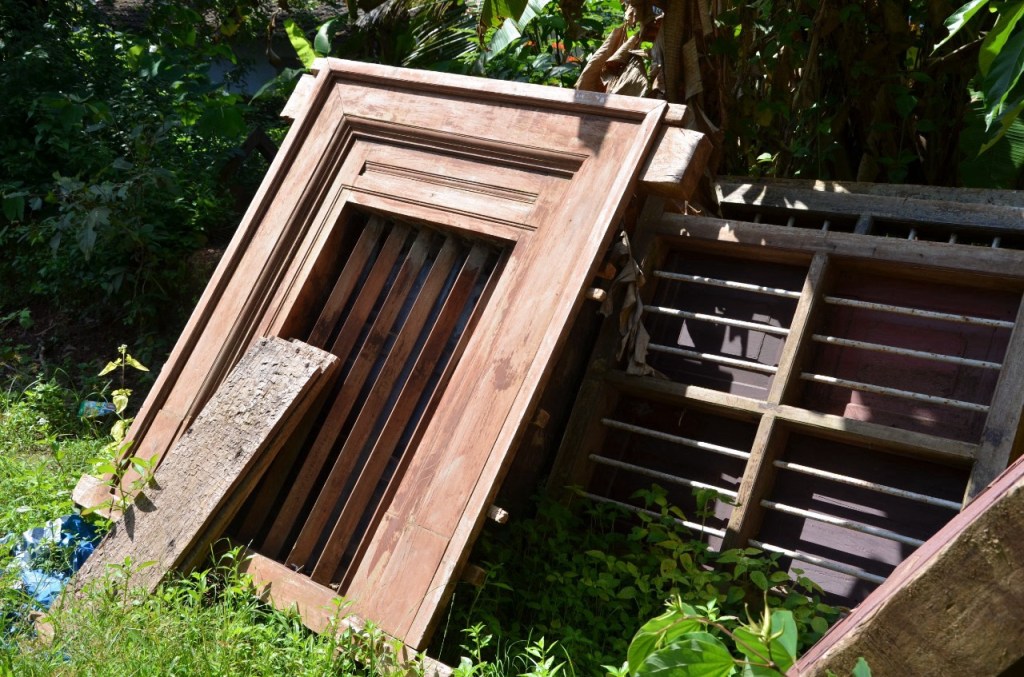
The house of my childhood has been demolished. I hear that the staircase, complete, is for sale. It is solid teak, of excellent quality, impervious to termites. Someone said that one of us should buy it.
My childhood home in Thalassery (Artist Vinay Nambiar)
Buy a staircase? The million times I ran up and down those stairs, chased by siblings, running up to complain to father, running down for dinner. If I buy that staircase, with its brass fixtures and its knurled banisters, will I hear father coming down in his wooden clogs and see the emerald green of his eyes? Will my mother give me refuge from the persecuting siblings? Will I hear the gentle shuffle of her feet?
I see the deer-heads and their disproportionately beautiful antlers, the punkha (fan) and its pulley, mementos of a past without electricity. The day I challenged God to place a bicycle in the punkha room by the next morning, as a condition for continuing to believe in Him. That very room where I permanently lost my faith when bleary eyed and sleepless, I ran in the next morning and saw no shiny new bicycle. Disappointed, I hide my tears in the car shed with its deadly repair pit and challenge the lurking spirits to either get me or leave me forever in peace. Even in my state of defiance, I dared not enter the forbidden woods of Thiyerankunnu with its granite alcoves dedicated to serpents both mythical and real.
The airy portico upstairs where I learned Malayalam and Maths from a tuition master. ‘Draw a loaf of bread’, he would say, ‘now cut it diagonally in half’. I learn how to write Ma of Malayalam while learning about diagonals and the abstraction of three dimensional objects into their orthogonal projections. The cool breeze from the Arabian sea tickle my hair and fill my nostrils with the smell of imminent rain.
Where is the ghost of the old maid Maadu gone? Still whimpering in the dark store room, now devoid of walls? I sense the darkness of the under stairs granary, the hide and seek favourite of the brave amongst us, with its heaps of raw rice and unhusked coconuts. I peep into the prayer room. Where, oh where, will those poor Gods go? Mahavishnu and his serpent bed; Siva in his resplendent leopard skin flaunting the menacing trident; Saraswati and her lute; Mahalakshmi and her lotus.
What about the delivery room where countless babies across several generations were born? And yes, the room downstairs with its bed of ebony and rosewood, where my ancestors breathed their last? Now Gods and ghosts, wander lost and untethered. No walls to hang from, no people to spook. I must house them before I am done with this story.
I see the beads of perspiration on my dear aunt’s forehead as she toiled with the smoking wood fire in the kitchen. I hear the rhythmic snort of Kuttappan as he split the hefty logs for firewood, his muscular torso heaving with each downward swing of the axe. I remember with fondness the young boy employed to look after me. Kuttiraman was only a few years older, but his wild stories enthral us while the monsoon rains serenade a magical lullaby outside.
Fast forward some years to the machete wound one of us inflicted on Kuttiraman’s arm while he ground for dosa on the well-worn mortar and pestle. Granite stone turned to marble with decades of grinding. The beads of blood seep out from the muscle just near his elbow, like little dew drops on the grass. He looks murder but exercises serious self-restraint for a hundred different reasons. One of them, perhaps, the helpless poverty he would return to, if he retaliates.
Cricket played with balls woven from coconut tree leaves and bats shaped from the spine of palm frond. Wickets of sticks, on laterite stone, blood colour red dust mixing in with grazed knees and elbows. The evening after school and before dusk, almost every evening, before the sun set. My sisters emerge with oil lamps invoking the Gods. Having lost faith, I smirk silently and wish the dusk wouldn’t interrupt the day which has potential for endless cricket. We had invented a new score, or rather adapted an existing one. It was a century if we could hit the ball over the gate and onto Thiyarankunnu. A full hundred, if one had the strength to hit that shot. And a bonus of 10 for anyone who dared to retrieve it from the temple of snakes.
Was it not on such a cricketing evening that I saw my first white man? Botha van Ingen, coffee planter client, steps out of his Austin, door held open by his driver. Emerging polished brown shoes, khaki trousers, white shirt, smoking pipe, khaki hat with a russet silk rim. We are frozen like still shots from an old documentary film. Father emerges from his office on to the portico and down to the car porch to meet his old friend and client. Botha’s face, I register, is blood red. I hadn’t seen a face like that ever. Redder than the Hibiscus in our garden, and boy the Hibiscus was some red. As he passes me, he pats my head. The spell breaks. Cricket continues.
I blush to remember the curious incident when I was caught fondling another under the piled law books. Indeed, what about the law books and what about the law? What about those countless clients and peons and poor relatives who haunt the office space and its veranda? Or the discreet domestic messages that I carried from mother to father as he lectured his clients on points of jurisprudence? My ears ring as the wooden floor upstairs resonate with the patter of children’s feet. Father’s political speeches echo across town and ricochet in our ears as we prepare to sleep.
Deep and mysterious well, swallower of cricket balls, provider of sweet water, I hear you are still standing. You remember with me, the red tropical frog in the bathroom camouflaged as LifeBouy soap. Smoke from the water-heating stove diffusing and scattering the weak light from a shade-less low wattage bulb. I grab the frog, mistaking it for soap, and it leaps out of my hands, scratching my palms with little claws. I give you my story for safe keeping, for I know you will stand forever.
They broke my house to build a new one in its place. It shouldn’t hurt, but it does. I feel more than pain. I feel the agony of loss. Still, there is no fuss, and there is no resentment. Only a hollow feeling that somehow the ghosts of my past are out in the streets. Where shall I confine them? How shall I fill the void?
The problem has suggested the solution. I have now built a house in my mind and connected it to the well that still stands. All the little memories, the big fears, ghosts, spirits, and bicycle denying Gods now live there, happy and comfortable, in an ever after sort of permanence. And no, I don’t need that staircase. This mind house has only one storey.
Rishikesh, a small town in the foothills of the Himalayas, was made famous by the Beatles in 1968. Some decades later, soon after the birth of my first son, I travelled there on my own. I wish to ‘find myself’, I told my wife. Her parting words were prescient. “You can find yourself anywhere. You don’t need to travel to the mountains.” She was right indeed. But let me tell you about my trip to the mountain – a trip in every sense of the word.
On reaching Rishikesh, I walked along the Ganges until the teeming crowds thinned and then disappeared. I was alone with the sound of the gushing river and the trill of birds. A Himalayan langur, an aureole of silky white hair around its coal black face, bared its teeth at me from a tree. A primordial chill of fear surged through my spine. The mellow evening sun shone furtively through the lush foliage. I swam in the fast flowing river, soon exhausting myself. I then lay down on a flat rock, until my mind was empty of thoughts. I did not know where I was going to stay the night, but strangely, I did not care.
As I soaked up the evening sun, I noticed the ochre robes of a guru up on the mountain. His hut, built on an impossible slope, overlooked the river. On an impulse, I walked up and asked the guru if he would accommodate me for a few days.
“Have you run away from your family?” He had obviously known others who took the ascetic route out of family responsibilities.
“Yes, for a few days.” I was candid.
The guru showed me to a small room with a ringside view of the river. The cool breeze kissed the trees, carrying the fragrance of pine and Deodar cedar into my room. I spent most of the next couple of days contemplating the river, waking at dawn, and sleeping at dusk. The guru respected my preference for silence over conversation. He left me alone. One afternoon, three days later, he tapped me on the shoulder.
“I will show you a better place.’ he said. “It’s ideal for meditation.”
He took me down the mountain to a little cave on the riverbank. The only furniture inside was a rough cement platform, the size of a single mattress. We had to crawl around on our hands and knees due to the low ceiling. The guru presented me with a yellow cloth, approximately a meter wide and a few metres long. He then gave me a Rudraksh[1] seed strung on a cotton thread and asked me to wear it around my neck. Discarding my city clothes, I draped the yellow cloth around my waist. My cave was only a few feet away from the roiling river. I felt a part of it. A huge boulder in the middle interrupted its flow; water sprayed upwards painting the air with dancing rainbows. As the sun set, its golden-orange glow imbued the river with a sensuous, almost ethereal beauty.
When darkness fell, I lay down to rest. Some moonlight filtered in through the entrance. The rugged contours of the cave gradually became visible as my eyes got used to the dim light. Drifting off to sleep I felt at peace with myself and the world. I was excited by my experiments with spirituality and believed I was beginning to understand another dimension of happiness. I reflected on the eastern tradition of seeing worldly attachments as the causation of misery. The austere life appealed to me, and I was glad to be rid of my urban appurtenances.
Suddenly, there appeared, on the ceiling just above my head, a giant spider. It was almost as big as a rat – hairy legs, hairier body and twitching whiskers – a tarantula. The spider had come to carry me away to the netherworld. Why couldn’t I stay home like a normal father of a new-born? What was I doing in this bloody cave? I panicked silently without moving a hair.
Then I remembered the words of the mystic philosopher Ramana Maharshi from a book I was reading on the bus. “God is present everywhere, in animate and inanimate objects”. I looked at the tarantula armed with this piece of wisdom. Momentarily suspending my atheistic cynicism, I saw God in its hairy body. I observed the protruding rocks around it and listened to the sound of the Ganges with an intensity I did not know I possessed. It occurred to me that perhaps God permeated everything around me. I reasoned that the spider that was about to devour me, the swollen full moon that looked as if it would drop into the river, and the river itself, were all the same: manifestations of the Divine. My fear dissolved. As if on cue, the spider walked away and disappeared into the crannies of the cave.
Encouraged by the previous night’s experience, I decided to intensify my quest. I turned frugal, reducing my intake to one meal a day, comprising fruits and a few chapatis that I collected from the local temples and gurudwaras. I observed the bustle of Rishikesh with a detached calmness unperturbed by the external chaos. Walking about in town and standing in the food line with mendicants were lessons in humility. The trait of humility is fundamental to one’s spiritual salvation (I had read somewhere), just as learning the alphabet is to one’s literary development.
Dressed only in the yellow cloth, chest bare except for a solitary bead, barefooted, I became invisible to the world. Shopkeepers acknowledged my presence only when the last of their customers were served. I maintained a decorous equanimity, drawing on my spiritual reserves not to protest at such indignities. My ego took a massive blow, but in compensation, I had insight into the frailty of human interaction that was based on appearance rather than substance. I also realised that one can only transcend one’s ego by destroying it or at least, diminishing it. I began to see myself less subjectively and treated every social encounter as another tentative step towards my goal of self-discovery. I was proud of my journey and the progress I thought I was making. Thinking about it now, I was substituting one type of ego for another.
The weeks passed. Every morning I woke up at sunrise to swim in the icy water and spent most of the morning meditating under a tree on the riverbank. I spent hours sitting still and cross-legged on an elevated slab of granite. The pain in my ankles, excruciating in the beginning, gradually disappeared. There was no doubt in my mind that nirvana was imminent. The tree under which I sat, I believed, was my very own Bodhi tree. Like the Buddha, I too would soon attain moksha, liberation from the eternal cycle of birth and death. My face, I believed, reflected an inner peace. I was fast approaching the altar of wisdom, the denouement of my self-finding drama.
One evening, engrossed in deep meditation under my tree, I noticed in the periphery of my vision, a beautiful young woman. She had not seen me. Presumably thinking herself to be alone, she began removing her saree. Without warning, I lost my composure. I watched her undress, open mouthed. Naked except for an underskirt, she dived into the river and swam with languidly elegant strokes. Her long black hair floated around her. Her firm breasts glistened as the cold water formed tiny bubbles on her skin. The curves of her body, her clinging wet skirt and the chocolate brown areolas on her nipples completely vanquished my tranquillity. My exalted state of mind imploded and went on a rampage like a thousand monkeys let loose in a banana market. The yellow cloth around my waist struggled to contain my excitement. I had fallen right off the enlightenment tree and knew I could not climb back up again.
As suddenly as she had appeared, the woman vanished. I did not waste any time. Climbing down from my rock, I said goodbye to the guru and took the next bus home. In trying to find myself, I was found out. I realised then that I had a long way to go to attain enlightenment and longer still to become a responsible family man. To this day I wonder who the woman was. Was she human, or an avatar dispatched to test my spiritual fortitude?










 gopistory.com