• New Year Solutions

    Happy New Year to all my friends and family. Let us hope 2025 will prove both Nostradamus and Baba Vanga wrong. They have prophesied apocalypse this year. On that cheerful note let me tell you about my New Year resolutions – sorry solutions.

    Every year, I make New Year resolutions and every year I break them after a few months, sometimes weeks. The main problem is that it becomes an all or nothing endeavour. I will not eat chocolates, I will not consume alcohol, I will go to the gym 7 days a week, I will write a minimum of 500 words daily, and so on. In short, my resolutions are designed to fail and they invariably do. I know I shouldn’t be eating sweets because I have diabetes. Someone said to me the other day, ‘You will go blind if you eat so many sweets.’ The riposte that popped up in my head was, ‘Sweets would still taste delightful.’

    But seriously, I need to get rid of that sweet tooth. The quality of my sleep is better if I don’t consume any alcohol. I am overweight and the case for sweating it out in the gym is very strong. I wish to improve my writing – so, as many writers tell me, I must write something every day, even if it’s crap. My resolutions, as you can see, are well intended. However, they simply don’t work.

    The pattern is the same every year. I am resolute in achieving my goals. Weeks pass. Counter arguments to defeat my resolutions gradually line up like some superior army against an already weak and demoralised enemy. The eastern concept that everything is an illusion (ergo nothing matters) join forces with its unlikely bed fellows – the existentialist tenets of the west – freedom of choice and individual responsibility. The first casualty is usually the anti-sweet pledge. I pop one measly chocolate bar into my mouth and the rest of the resolutions come tumbling down like a house of cards. Excessive drinking becomes a routine (in my case one or two glasses of wine a day), I forget the way to the gym and the realisation that writing without being inspired is not something I am able to do! I am back to square one.

    A wise friend of mine from Sheffield told me one year that his only New Year resolution was to drink more red wine. He did not say he intended to reduce his white wine consumption proportionately. I had just assumed that to be a given. Only last evening, did I realise that I could have been wrong all these years. His was a New Year solution not a resolution. I have, therefore, decided to decapitate the word, remove the ‘re’ from resolution. Like the mythical Phoenix, the solution has emerged from the ashes of broken self-promises: no New Year resolutions this year, just less of everything.

  • Serendipity in the Bosphorus

    In life, one never forgets certain events. These serendipities form indelible impressions on the psyche. They leave a yearning, a desperate wish to repeat the experience, to relive the sudden elation of a moment long past. More often than not, it remains a yearning, futile hope rather than purposeful aspiration.

    The first time I saw Istanbul was by a lucky accident. I had just begun my career as a marine engineer. It was 1980 and I was one of the two fifth engineers on a general cargo ship. A fifth engineer spends his time either sleeping or working in the engine room.

    In the summer months, the engine room is an oven, the temperatures often exceeding 55 C or more near the engines and boilers. The cacophony of multiple running machinery is an aural assault on the hapless engine room crew. Faint smells of leaking exhaust gases and burning diesel adds to the misery.

    While at sea, an engineer doesn’t usually have much locational awareness. I knew our destination but that was about it. My ship was on its way to the Black Sea port of Ilyichevsk in the then Soviet Union. I knew that we were in the strait of Bosphorus and would be passing under the bridge connecting the continents of Europe and Asia. Sadly, I was in the engine room at the time, under the waterline.

    Had I not popped out on deck that evening for some respite from the heat and noise, would I have fallen in love with Istanbul the way I did? Was it just for me that the sun was setting on the city, bathing its splendid mosques in golden orange, silhouetting the squawking seagulls against slender minarets? Did I not momentarily forget the heat and din when the cool sea breeze on my sweaty overalls comforted me in its delicate embrace? For a few ephemeral but precious moments, I stood frozen on the deck of the moving ship, absorbing the magnificent vista gliding past me. I became a part of Istanbul and Istanbul became a part of me.

    And so, after more than four decades, I was fortunate to experience nearly identical emotions as the ferry plying between the two continents approached Eminönü, its final stop. The sunset, gulls, minarets – were all there as if the intervening years were illusory and nothing had changed. I was glad that despite the years, I hadn’t lost the capacity to be astounded and love-struck.

    NB: apologies to those who read the earlier version. I have shortened it to remove all the unnecessary details. I had violated the Chekov’s gun principle (if you introduce a gun into the story it must go off before the story ends).

  • Home away from home

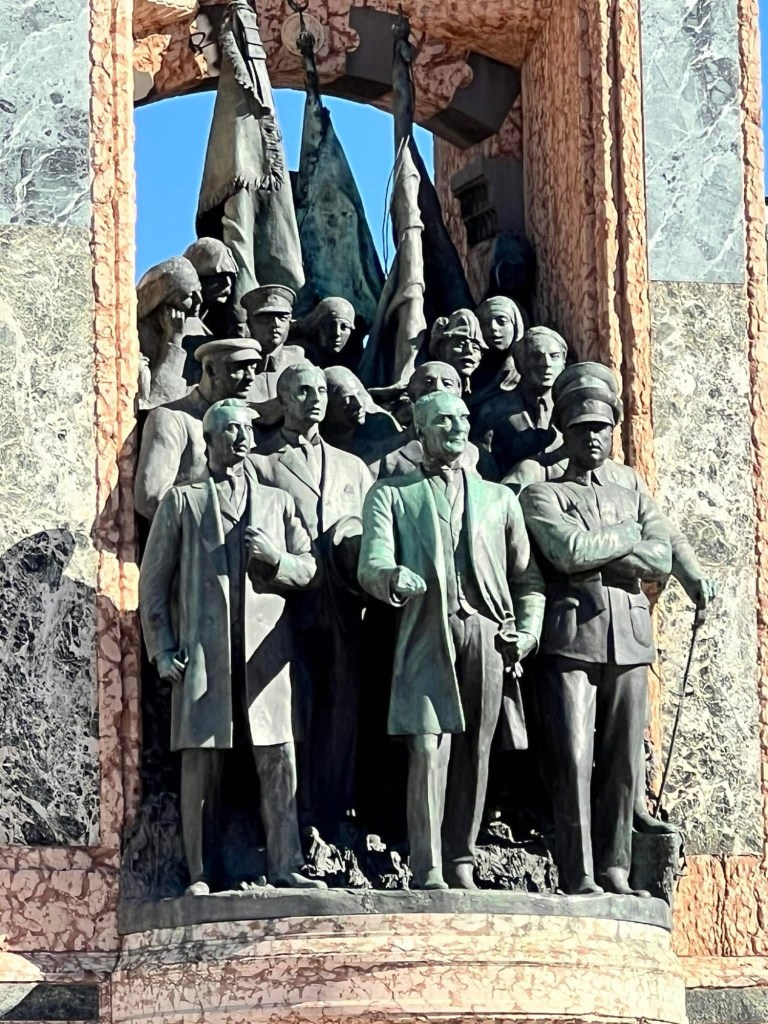
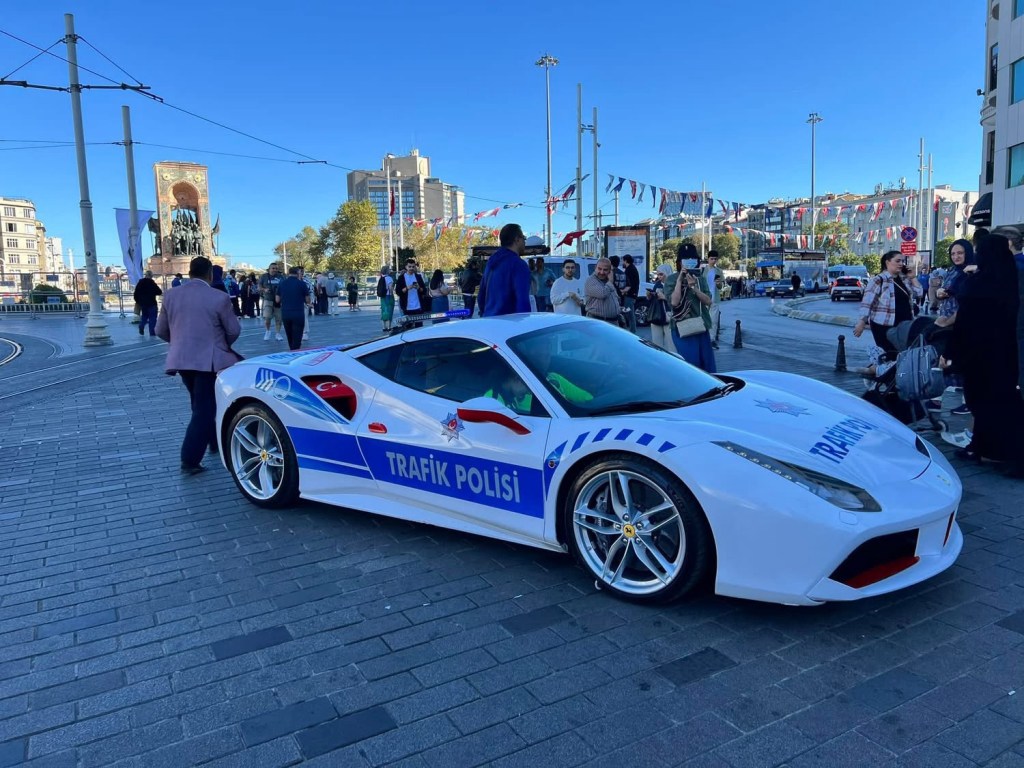
    The Republic monument in Taksim square, Istanbul – the epicentre of political protests – is now cordoned off by the POLICE. India Gate in Delhi is closed for business too. History is being rewritten in Turkey. Nothing new there. Those miserable Moghuls are being gradually purged from our history too; what are they doing in our Hindu Rashtra anyway? Kemal Ataturk is not the favourite anymore. Mahatma Gandhi, don’t worry, you are not alone. School curriculum has been altered to refelect the new history of the Turkish Republic. NCERT തഥൈവ! Jai Sreeram. Name of the country changed from Turkish Republic to Turkiye. India? Welcome to Bharath. Contempt in some quarters towards women not properly covered. Bharathi naree don’t get caught up in love jehads. Voices automatically lowered when Erdogan is mentioned. In Bharath, the M word may be freely used, but only in unctuous eulogies. Fearless Turkish journalists are rotting in jail. Bharathi journalists have been tamed, others can go to jail. Antinational bastards. Serves them right. Why did they commit unlawful acts like criticising the government? Didn’t they know about UA(P)A?
    Where am I? Turkiye? Bharath? I feel so homesick!

  • Swans and bagels on the motorway

    I don’t think I was cut out to be a photo journalist. Whenever I witness something completely out of the ordinary, I forget to take a photograph. Some 6 months ago we were on a coach to London from Southampton. We were speeding along the M25 (for those not familiar, it is a 188 km circular motorway around London) when all of a sudden, the traffic slowed down to walking pace. In the slow lane was a full grown swan, waddling along as if it owned the road! We stared at the elegant bird, open-mouthed. None of us clicked a picture.

    Recently, on our way from Istanbul airport to our accommodation, a similar thing happened. The traffic was crawling along due to an incident on the motorway. Taking advantage of the slow pace was a man with a little cart selling Turkish bagels (simit)! That too in the fast lane. An extraordinary sight for us. I didn’t have the presence of mind to take a few pictures. Instead, I said something like, ‘Look look’ to my wife. The cab driver, thinking I wanted a bagel, pulled up close to the cart! I had a hard time communicating with him that my mouth was open in astonishment and not in hunger.

    So, I’m afraid I had to bore you with a thousand words instead of a couple of photographs of the scene.

  • A failed experiment

    Some six months ago, I started growing a beard or more correctly, stopped shaving. My beard is of a rebellious nature and does not grow uniformly. It is mostly white whereas the hair on my head is preponderantly black. When friends started telling me that I have put on an extra 10 years with the added facial hair, I let them in on a secret: I was growing a beard for precisely that reason. It was a social experiment that I was planning. The litmus test would be conducted during a ride in the Metro in any Indian city. In the past, no one offered me a seat although the signs clearly announce that some seats are reserved for senior citizens. I was sure I now looked the part – every bit a senior citizen with a flowing white beard.

    With great hopes, I boarded the Bangalore Metro and manoeuvred through the milling crowd to a seat reserved for senior citizens. It was occupied by two strapping young men and I hovered expectantly right in front of them. But, they just gave me a brief glance and continued canoodling their phones. Disappointed, I looked up at the sign. The Metro authorities had changed it. They now invoke their patrons to offer the seat to:
    the elderly, disabled, women with babies and pregnant women. The words were illustrated with a woman holding a baby, someone leaning on a stick, a disabled person with crutches, and a heavily pregnant woman! No mention of senior citizens.

    My social experiment has failed. I will not tempt fate by wielding a walking stick; neither will I invest in a pair of crutches. I couldn’t get pregnant and even if I could borrow a baby, I wouldn’t qualify as a man carrying a baby doesn’t.

    I must find a good barber.

  • Day 8: Colombo

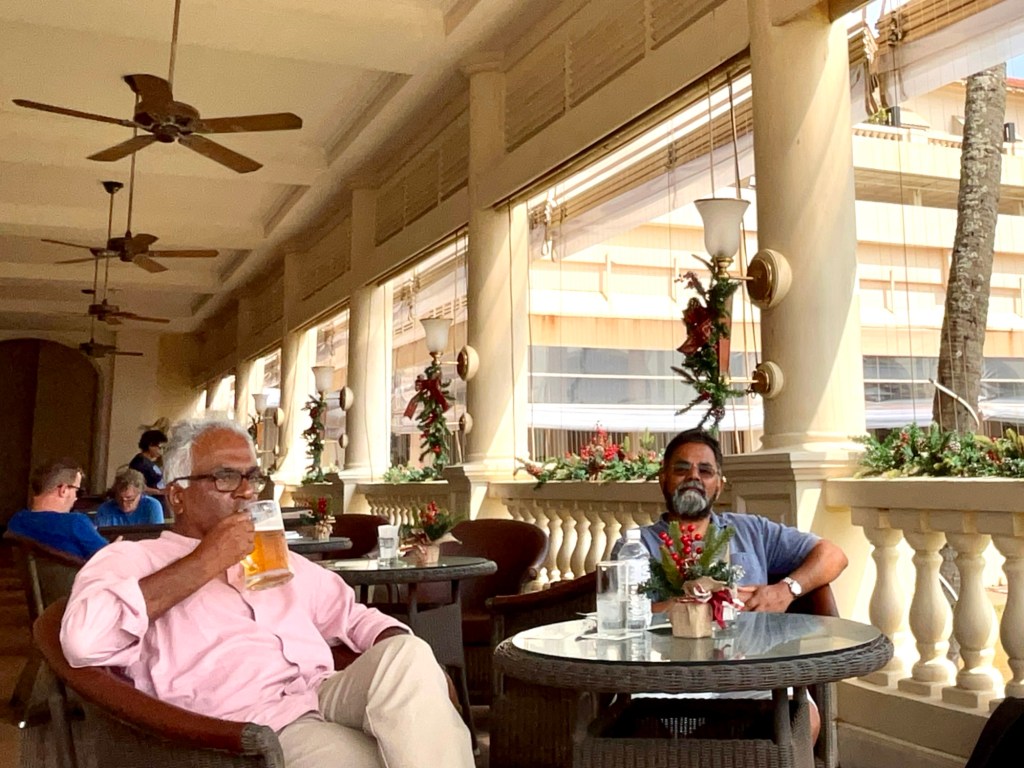
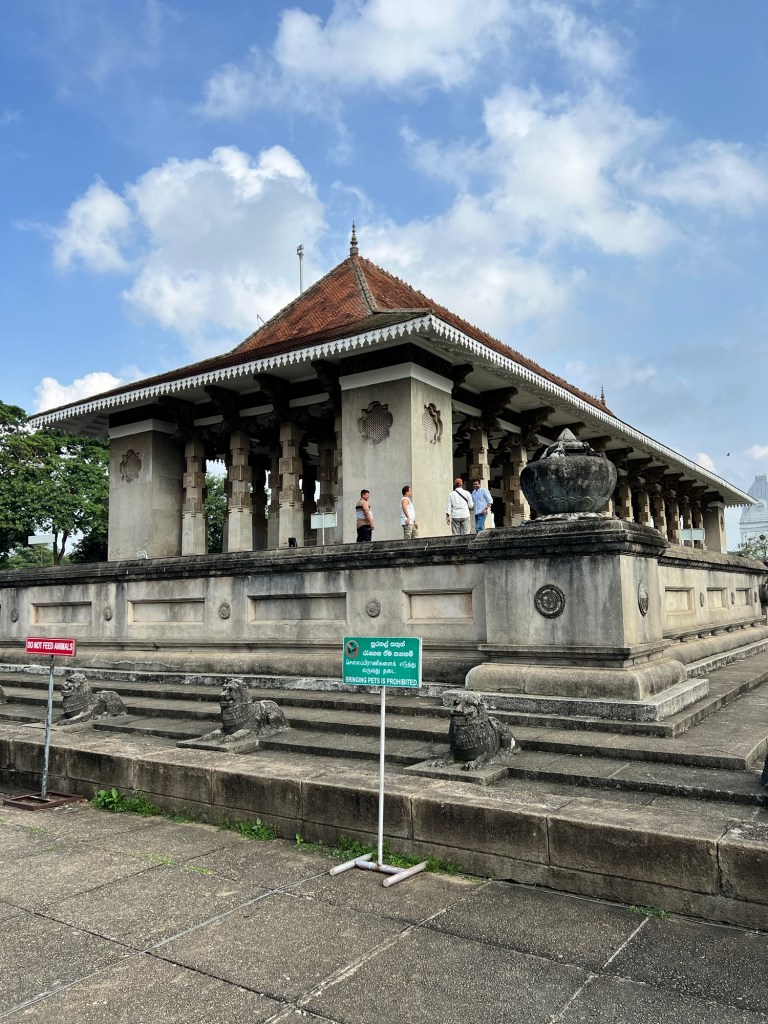
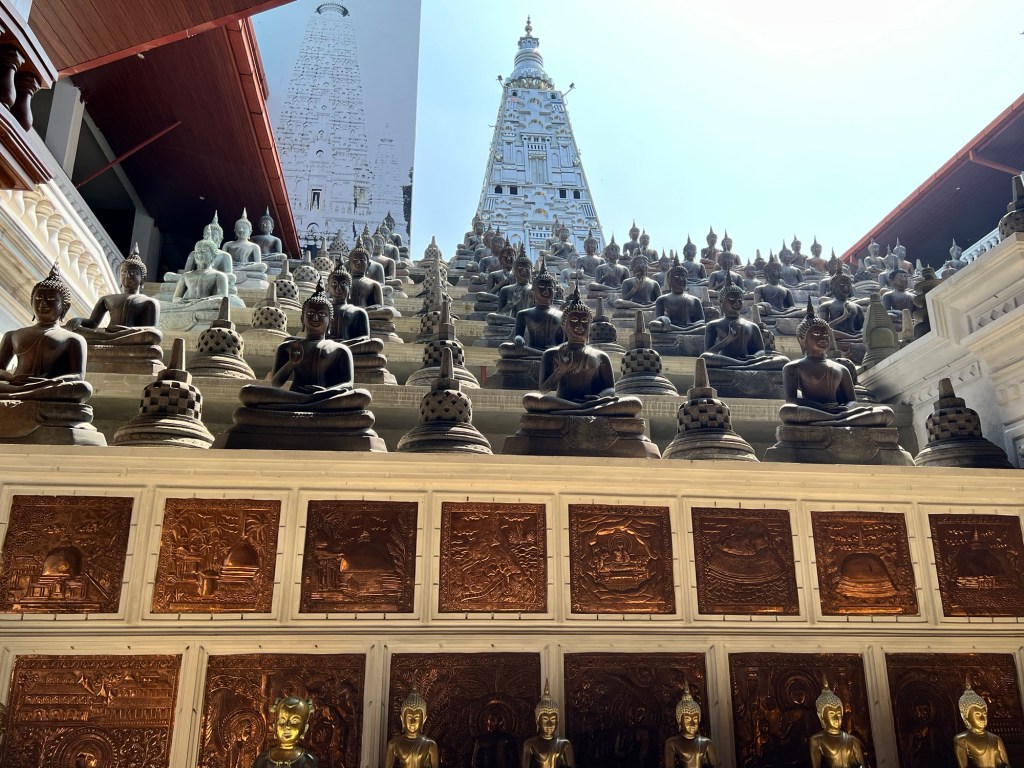
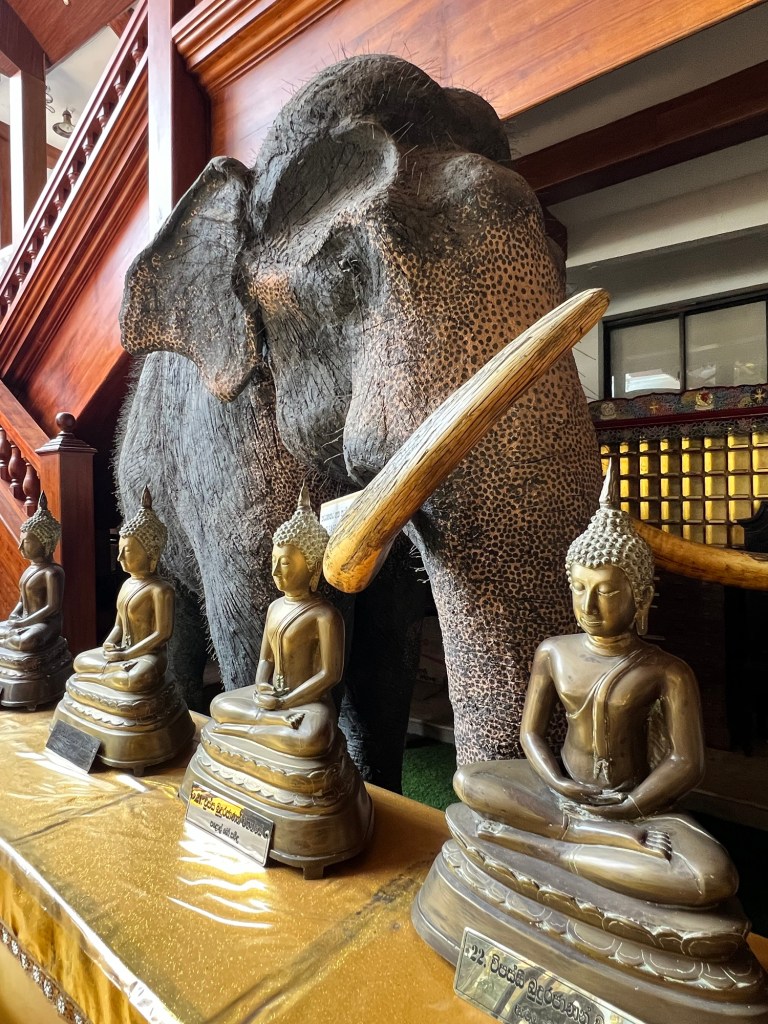
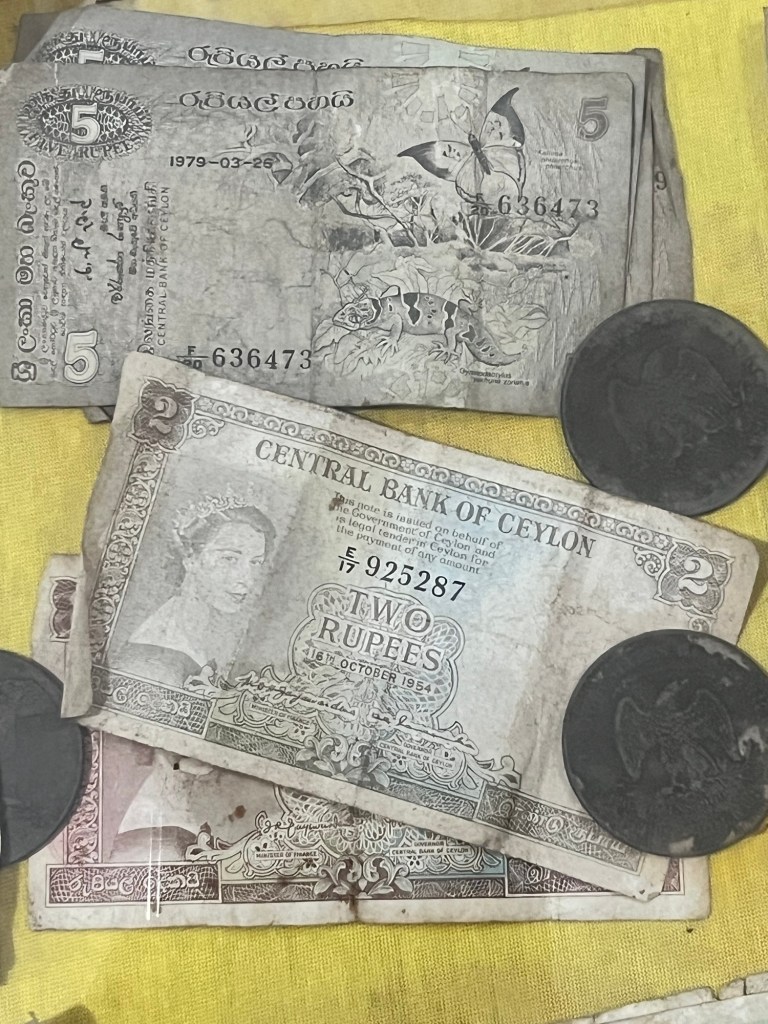
    It was a good decision to visit Colombo on the last day. We did bask in some colonial luxury at the Galle Face Hotel, breathing the sea air and sipping beer. However, Colombo, like any other city, is not a place where I would want to spend too much time.

    The train ride from Waikkal to Colombo was reminiscent of the Indian trains of the late 80s complete with the small cardboard tickets with embossed serial numbers. A one way ticket cost us only 120 Lankan rupees while the return cab ride cost 5200!

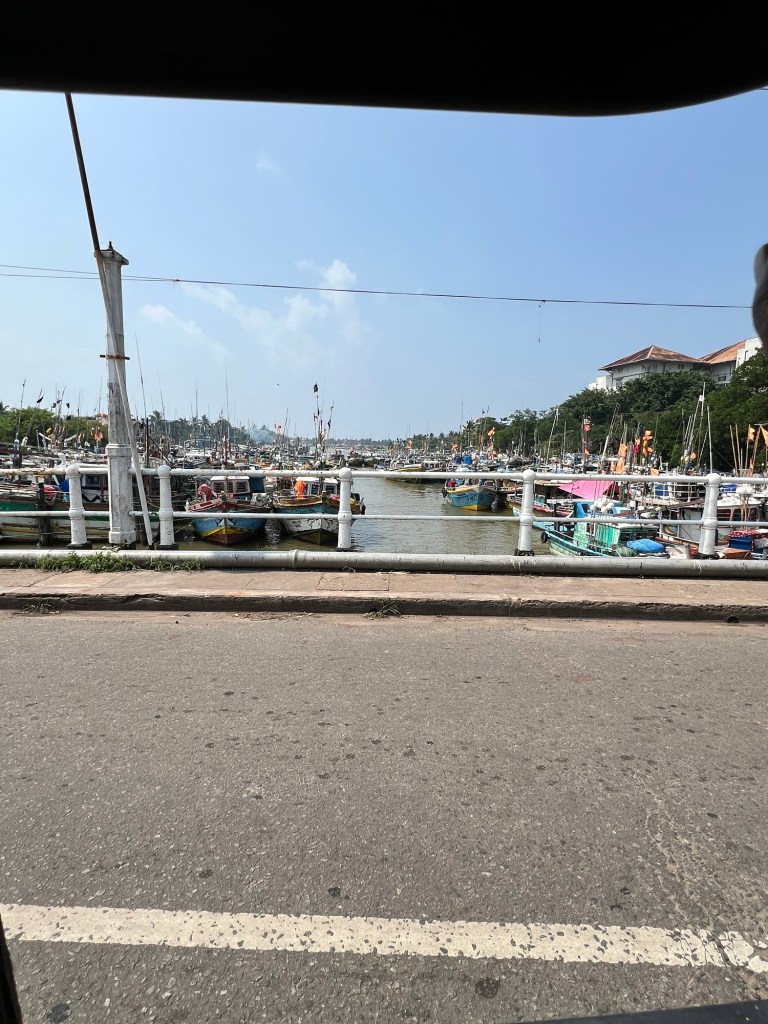
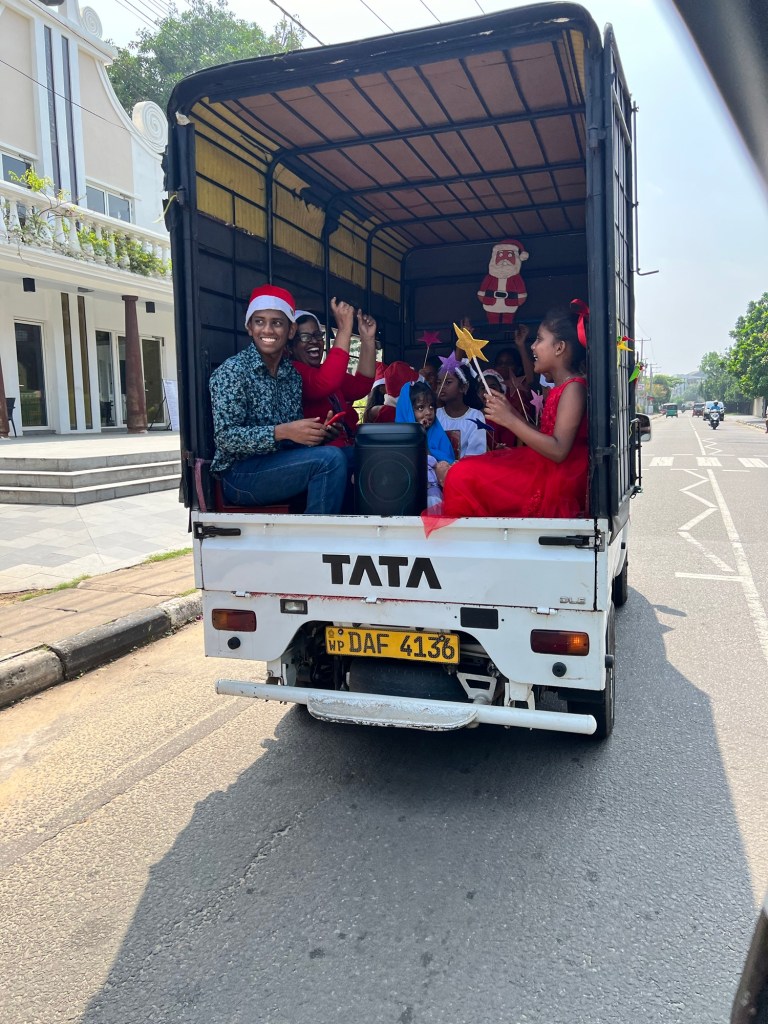
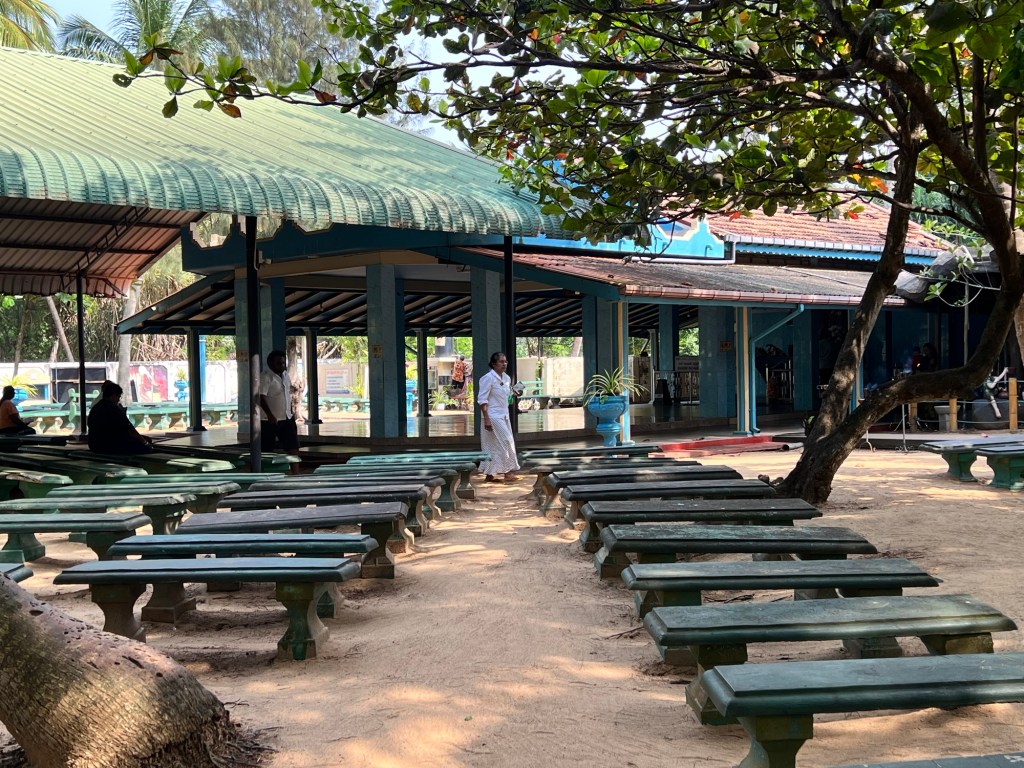
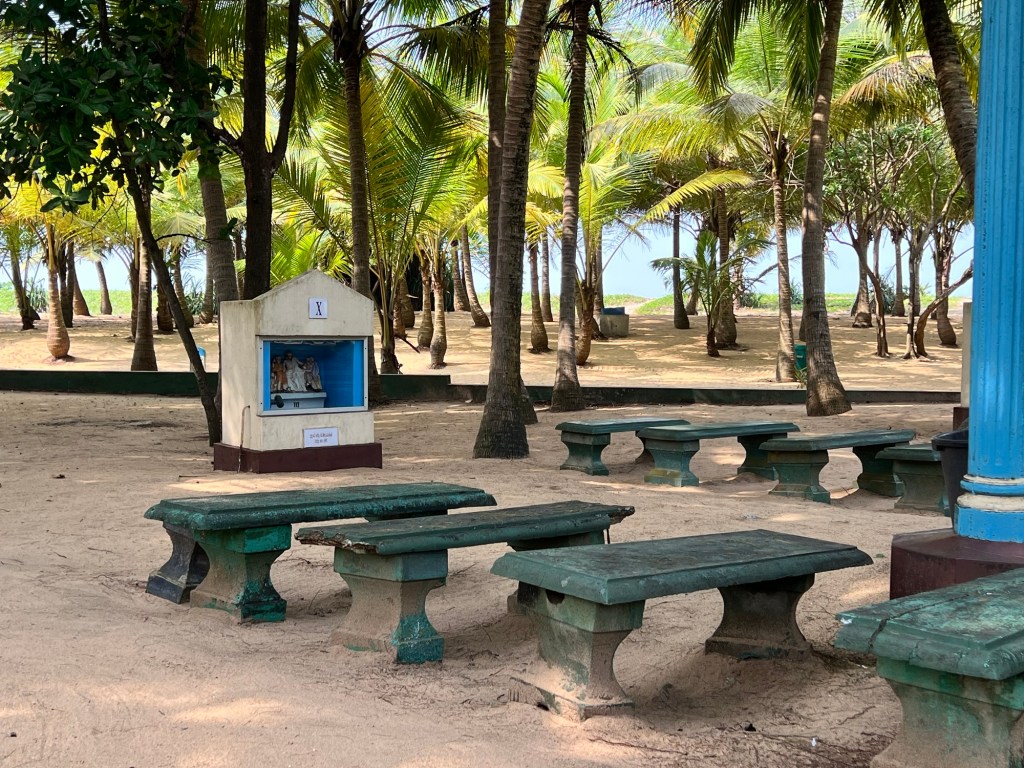
    At Colombo station, the tourist office suggested we hire a tuk tuk for sightseeing. Promptly, there appeared a driver who claimed to speak English but quickly switched to Tamil which we understood, mostly. He had an eerie resemblance to the tourist office man. I don’t have the heart to describe everything we saw. The photographs give you a rough idea.

    A man we met at the ATM, Shiva, offered to accompany us to the bus stand for the return journey. After discovering that traveling by bus would involve another taxi ride nearer our destination, we decided to take a cab all the way. Shiva used his Pickme app to call one, waiting until it arrived. He even asked us to call him after reaching our hotel!

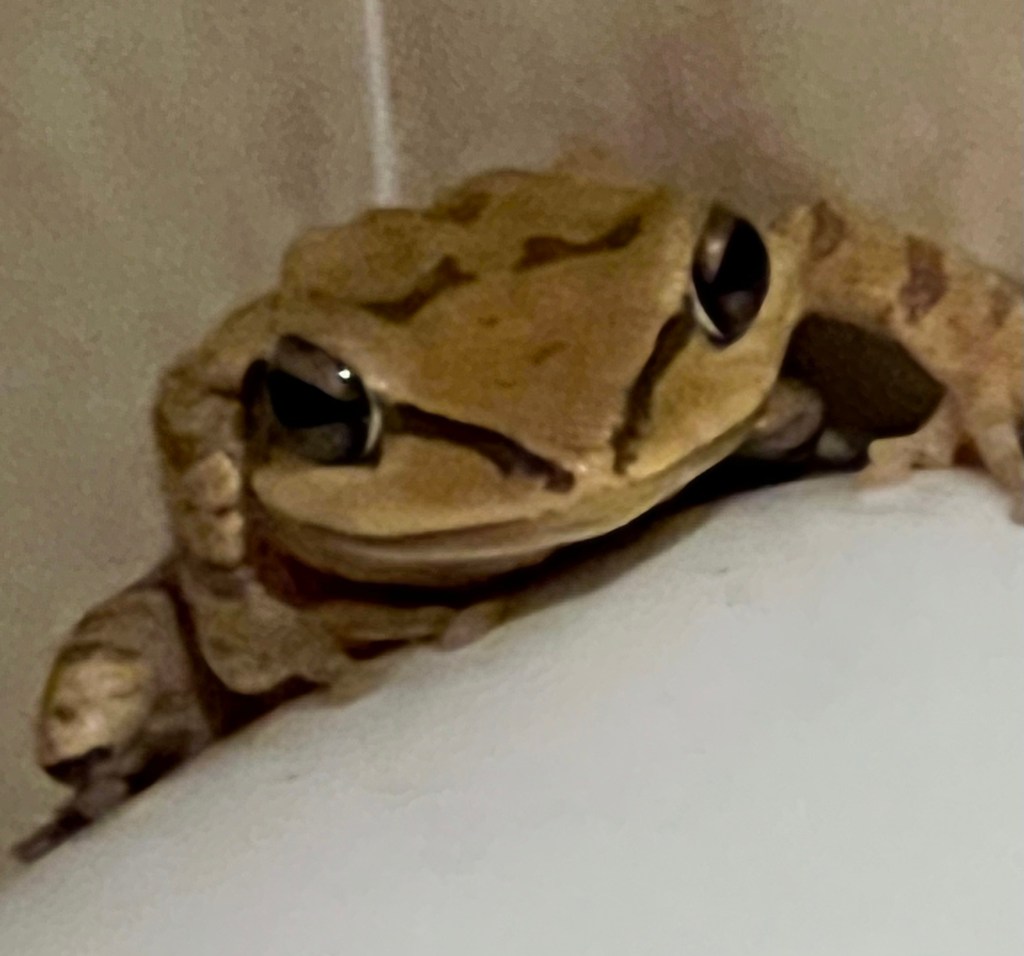
    So, let me close this series with a big thank you to all the lovely people of Sri Lanka, especially those who helped us, often going out of their way to do so. Thank you also to our faithful friend, the frog who followed us all the way from Jaffna. He was last seen in our bathroom.

    I hope you have enjoyed reading it all as well as viewing the photographs. I didn’t get a lot of time to proof read or edit before posting. Apologies for errors and omissions.

    Ayu Bhavan.

  • Day 7: Wenlankanni and Negombo

    The photos taken in Negombo lagoon and Wenlankanni can speak for themselves. I’m taking a couple of days off!

  • Day 6: Sigiriya

    My late father used to say after he turned 70 that it was time for him to stop reading to reflect on everything he had read. I feel the same now having worked hard these last few days absorbing a shedload of interesting history, religion and ancient architecture. My head feels full. I am glad that today is the last day of sightseeing.

    We treated ourselves to a swim and a bit of lie-in on the poolside loungers. After a breakfast of coconut roti with sambal, eggs and fresh tropical fruits washed down with flavoursome Ceylon tea, we were ready for the UNESCO registered world heritage site of the tabletop rock mountain of Sigiriya built by King Kashyapa in the 5th century. Our driver had warned us that yesterday’s gruesome climb up to the rock cave temple at Dambolla was nothing compared to what lie in store for us at Sigiriya. My stented heart beat that much faster listening to him.

    Looking up at the 180m high rock fortress with 2000 steps filled me with dread. Noting the average age of people attempting the climb made me sweat. I couldn’t find many of my vintage. Strange and morbid thoughts crossed my mind – How would I be carried down the narrow steps if I collapsed? Are there helicopters for medical evacuation? We had turned down several guides and were doing this on our own. So, no local knowledge or help either.

    Then I remembered my own advice to a young student at Sheffield University in the mid 90s where I was a mature MSc student. He used to worry so much during exams that despite being very clever, he invariably failed. I had counselled him,
    “What’s the worst that could happen to you?”
    After he responded with various scenarios including failing the course, his father stopping funding, he being jobless for ever and so on, I said to him,
    “No. The worst thing that could happen is you could die.”
    I don’t know whether that advice worked but he stopped talking to me after that.

    So now it was time for me to try my own medicine. Yes, I could die. So what, I said to myself without a lot of conviction. And it did feel like that a quarter of the way up as I panted like a dog and my head spun. Then it settled down. Halfway up at the plateau with the giant lion paws, I felt refreshed and the breathing became normal. The fear of death had disappeared and was replaced with the vigour of youth.

    The caressing breeze and delightful panaromic views, the distant white statue of the Buddha standing out amidst the verdant hills, terraced gardens with ingeniously engineered water features and concealed interconnecting conduits, soothed my fears which seemed insignificant in the midst of all this grandeur.

    We spent a lot of time at the summit admiring the ruins of palaces and gouged out reservoirs with breathtaking 360 degree views of the lush vegetation all around and the water gardens below. We were glad to have visited the dedicated museum before we embarked on the ascent. It gave us a better appreciation of what we saw. To add to the drama, a monkey snatched a slab of chocolate from Raju’s bag.

    Going down was a lot easier than going up and we returned to the car, but not before grabbing a few beers – no, just joking. We did get some fresh musambi juice on the way down. By dusk, we arrived at our final stop in Sri Lanka – a beach resort north of Colombo where we said goodbye to our wonderful driver and companion for the trip, Buddhika Sadaruwan.

    I look forward to some deep relaxation for the next two days. But, Raju is already talking about the lagoons of Negombo only a few kilometres from the resort! As a wise Indian mechanic on one of my ships said, “There is no rest for man or ox.”

  • Day 5: Anuradhapura and Dambulla

    Every time I visit a place of historic interest, the thought occurs to me: does a tourist guide exist anywhere who really knows what he or she is talking about? I have mostly come across guides who know a little bit about everything, who parrot off what they know in a robotic manner, struggle to answer questions sensibly and are more often than not, poorly paid. (An exception was the guide we employed recently in Istanbul).

    Our guide yesterday in Mihintale claimed to speak English and he did sound confident and erudite, but I could only get half of what he said in his own version of the English language. When I don’t employ a guide, I am racked by a sense of missed opportunities, of having traveled all the way and then not appreciating the significance of the place – like visiting the Louvre and not seeing the Mona Lisa. However, when I use the services of a guide, I feel like I could have had a much fuller, richer experience had I only taken the time to do some self-study in advance! What a conundrum!

    What I really need is someone with a good university education in history and archaeology of the area and a good command of a language I understand. But then the tourist guide profession is poorly paid and most people won’t be able to afford the services of a guide with a PhD. Such a person will be scarcer than hen’s teeth, as they say.

    Considering there are AI tools available which understand natural language and know everything about everything, I think it’s just a matter of time before this profession is replaced by machines or even an app. Perhaps there’s already one.

    Having got that rant off my chest, let me describe what I saw of the ancient capital of Anuradhapura. We stopped at Kuttam Patuna commonly known as the twin ponds. Decorated with carvings of lotus and sedges, the banks were fortified with stone steps to facilitate bathing of monks. It is a marvel of hydrological engineering with two tanks, symmetrically aligned, one smaller than the other and both connected by underground pipes with an ingenious filtration system.

    We then visited the Jetavanaramaya stupa, built in the 3rd century CE and is one of the tallest brick structures in the world even today. The sheer size and scale of the structure is overwhelming and the spiritual veneration displayed by the locals enhanced it from a wonderfully engineered building to a temple of peace and prayer. So was the large white Abhayagiri dagoba (a Sri Lankan term for stupa) only a short distance away.

    Abhayagiri stupa

    When we visited the archaeological museum yesterday, I chanced to see a notice which said that as a mark of respect one should try and wear white when visiting places of worship. So, I donned my Kerala mundu which has the added advantage of converting it to a knee length garment by going half mast or lowering it to a more respectful full mast position. Many Lankans asked me if I was from India and I happily replied, ‘Yes, Kerala’. I’m like a chameleon changing national affiliation as it suited me! The guard at the ‘foreigners only’ toilet tried to direct me to the locals’ toilet and I said to him, “I’m a foreigner” – Indian, British, take your pick. Chameleon indeed!

    I’m digressing. What little I saw of Anuradhapura makes me want to come back and spend a long time here. It has everything, engineering marvels, spirituality and a wonderfully peaceful and friendly people. People, mostly dressed in white, circumambulated the stupas chanting prayers and offering incense and flowers to the several shrines dotted around. As tourists, we felt like intruders. It felt the same at the Mahabodhi tree, the oldest documented tree in the world and a progeny of the original Bodhi tree of Lord Buddha. The menu card at the government run cafe we visited at the end of our brief glimpse of Anuradhapura was for me a metaphor for the immensely rich and diverse culture of the country and this city. It was the longest and most varied menu card I had ever seen and some of the snacks we tasted were out of this world.

    We headed to Dambulla to see the rock cave temple carved from a large granite stone and dating back to the first century BCE. Although the climb up was gruelling and cramp inducing, we were just gobsmacked by the sheer scale of the statues of the Buddha, deities and kings. The walls and ceilings were covered with frescos apparently making them the largest collection of murals in southeast Asia. They looked like fabric folding over the contours of the cave ceiling and walls.

    Dambulla Rock Cave temple
    Fresco on the ceiling

    I wish I had a day to rest between each day of sightseeing. I could be my own tourist guide then with the ability to educate myself for the next day. It’s hard work, this relentless sightseeing and then writing about it in the middle of the night. I’m enjoying it though and thank you for making the effort to read it all.

  • Day 4: Anuradhapura and Mihintale

    The tribulations of Day 3 seem to have caught us in the wake. We realised this after arriving at the wonderful accommodation at Anuradhapura late in the evening. Despite being promised by the owner that an extra bed would be provided for my nephew and travel companion, we found the room had just one king-sized bed. In every other way, the place was ideal with just two large bedrooms, one on each floor. The building was set in the midst of a large compound on the shore of a lake. But we didn’t see the greenery nor the lake as it was dark and that was just as well because the last thing we wanted to see was more water!

    The person who checked us in spoke no English and we were left to deal with him as our Sinhalese driver had left for his hotel. A sample of the conversation went,

    “Where is the extra bed?”
    “Bed?” He pointed at the only bed which was mine following the uncle-nephew protocol.
    “No no. EXTRA bed. You promised.”

    Total incomprehension. Then I discovered there was no toilet paper.

    “ No toilet paper!!?”
    “Finished.”
    “Finished?”
    “Finished.”

    Checking the tea coffee supplies, I found they had not provided any milk.

    “No milk? Morning tea – we need milk.”
    “Milk?”
    “Milk – milk for coffee tea.”
    “Coffee, tea,” he responded pointing at the tray with tea bags and instant coffee but no milk.

    Somehow, with great persistence we managed to communicate the extra bed issue to our man. A folding bed that looked like it’s been rescued from a junkyard was promptly provided. Raju was not impressed and a nimbus cloud settled on his face as he settled in his hammock, sorry bed.

    With the help of a translation app we eventually overcame the language issues and the man returned with one roll of toilet paper and a small packet of milk (kiri). Then he gave us a phone number and said,

    “Call madam.”

    Madam reassured us that the bed would be replaced the next day.

    The next morning, after breakfast, we drove to the Mihintale Buddhist temple complex where we hired a guide. The place was made famous by Emperor Ashoka’s son Mahinda who was brought up in the Buddhist faith and had attained the status of an Arhat or enlightened monk. He is supposed to have arrived in Sri Lanka around 250 BC and converted the king and his 40,000 subjects to Buddhism – every missionary’s dream.

    Those of weak knees need not visit this place but it’s worth each of the 1000 odd steps one has to climb to reach the various places of interest within the complex. The intricate channels conducting water from Naga Potuna (Snake pond) to lower levels, the refectory where thousands of monks were fed, the present day monks – just young boys – learning the Buddhist dhamma (dharma or moral duty), the tablets inscribed in the Brahmi script and later in medieval Sinhala with details such as the remuneration to be paid for every job role ranging from dancer to keeper of relics and the living code of monks, the 60 odd stupas encasing their remains, and the dagobas, are all delightful markers of history one must not miss.

    Many firsts are claimed and authenticated in the archaeology museum including the first ever requirement for an accounting system for businesses and the first hospital in the world. At Mihintale temple we witnessed another first – a cat and a deer who seemed to get along like a house on fire. We saw elderly ladies with walkers painfully negotiating the treacherous granite steps just to visit the cave where the prince turned monk slept for 48 years. Faith, as they say, moves mountains.

    I was intrigued by the number of common words in Sinhala, possibly a derivative of the liturgic language Pali, and Indian languages. I must refresh my knowledge on Pali and its connection with Sanskrit, the mother of most Indian languages. I wondered if there exists an app that could list common words from languages.

    We returned to our accommodation, but not before picking up a few cans of beer at an Anuradhapura wine shop which didn’t stock wine. Raju’s bed was replaced with a sturdy one and peacocks called out as dusk set in. And it didn’t rain on day 4. Things are looking up, the cyclone has hopefully moved on. The frog from day 1 and 2 seems to have followed us and is now living behind the bathroom mirror.