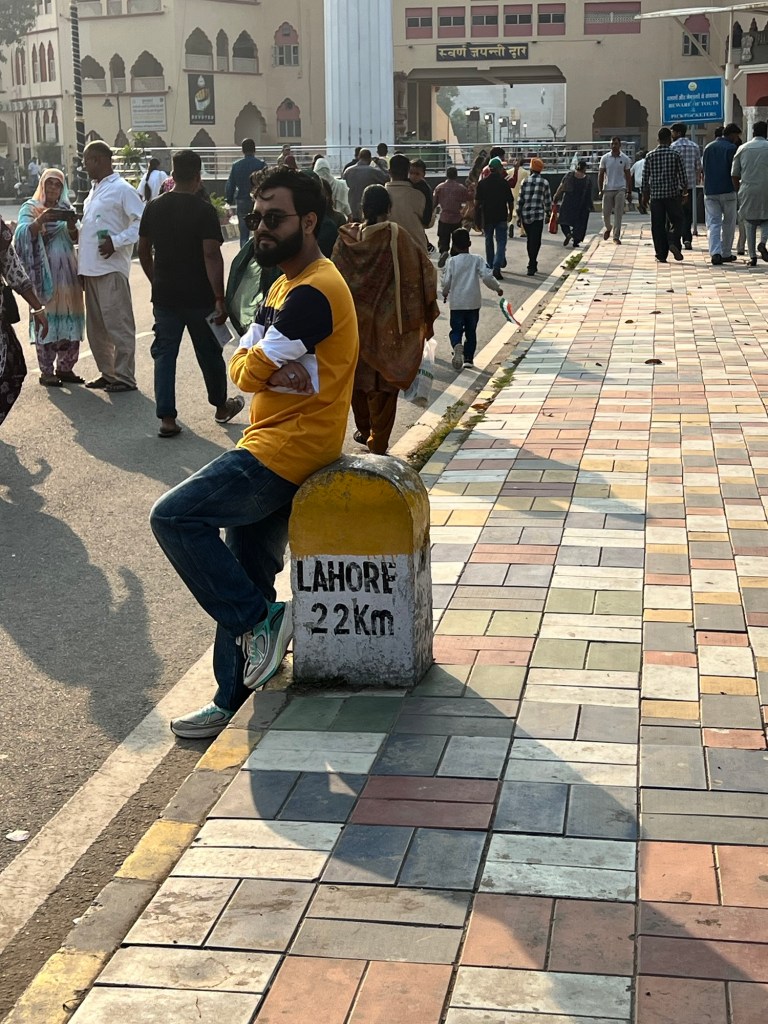
I don’t know why I went to the border. Perhaps I wanted to witness the spectacle as seen on TV, perhaps I craved bragging rights for having seen it with my own eyes. We made the 25 km ride from Amritsar to the Wagah-Attari border. The locals call it the Wagah border and barely anyone by the name of its Indian counterpart, Attari. Wagah is in Pakistan. It gave one a flavour of how close the two nations are – in physical geography as well as in the minds of its peoples. A milestone indicating Lahore 22 km stood in mocking irony.
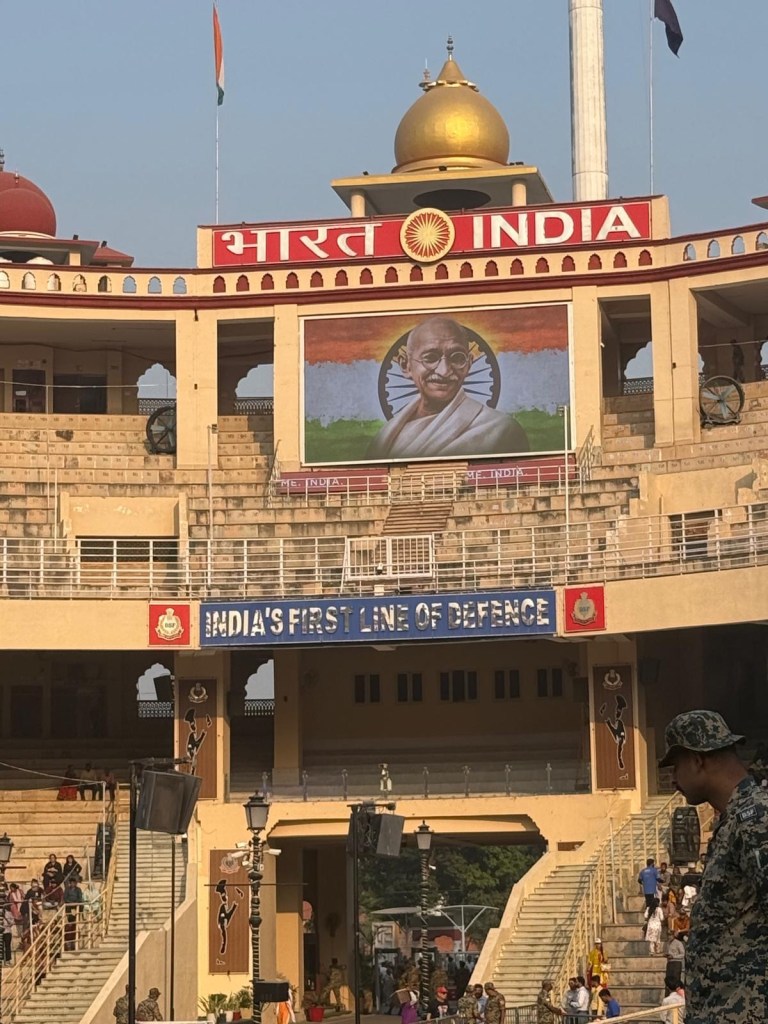
We were early and secured a ringside view of the spectacle. The first thing that hit me was the cacophony, patriotic music blaring from both sides. Both their edifices looked similar with the subtle distinction between the Islamic gumbads and the domes of a gurudwara. Both sides displayed portraits of their respective founding fathers. Two giant steel gates within a few feet of each other separated the two nations. Guards with automatic guns stood watch.
The unsynchronised activities from both sides continued for over an hour. The Border Security Force on the Indian side exhorted the crowd to generate noise. Whipping them into a frenzy of nationalist fervour, he required them to accompany him in Vande Mataram chants. Similar activities were taking place on the other side. The galleries were filling up on both sides.
A man with one leg waving a Pakistani flag, spun around and hopped endlessly. How anyone could endure such physical activity beat me. His performance contrasted with the hordes of women who suddenly appeared on the Indian side, dancing and chest-thumping to nationalist songs. Soldiers goose-stepped and raised their legs throwing each leg above their shoulders. The flexibility of their joints was remarkable – it has to be, considering they do it every day of the year.
Two dogs marched with their keepers. They went down on their bellies in a salute to the chief guest, a man in uniform, of obvious seniority. There was joy in the crowd, a sense of nationalist pride. The BSF soldier kept it going with his frequent calls to the crowd over the loudspeakers.
I sat there silently contemplating the impossible what-ifs. What if there had been no partition? What if the Indian sub-continent was not divided by a colonial official who had never visited India? What if the two countries were friends? Would there be ceremonies of brotherhood instead of rivalry? Would there be such hatred perfected to an art form and on daily display?
Soldiers from both sides approached the barred steel gates through which even a dog couldn’t wriggle through. They twirled their moustaches, broadened their chests, they rolled eyes and glowered at each other – exactly as in the Maori haka performance by the New Zealand All Blacks rugby team. Except in this case, the sabre rattling was done with unsheathed swords and guns – fortunately pointed down.
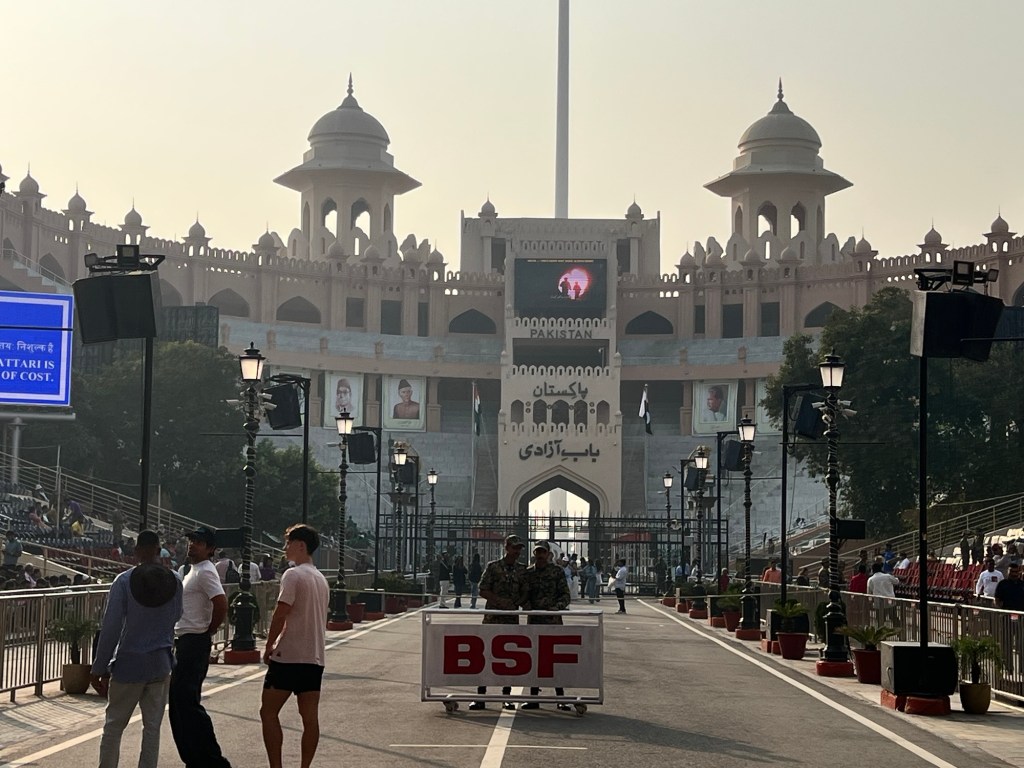
Then finally, both sides engaged in lowering their respective flags. It was perfectly choreographed and synchronised. As dusk was beginning to set, the mood was sombre. The last post sounded to me like a funeral dirge, melancholic yet poignant. It was a spectacle to watch. I left with a catch in my throat and a tear in my eye, contemplating what could have been.


Leave a Reply