Georgetown, a UNESCO world heritage site in Penang island, at the northwest coast of the Malay peninsula, is a potpourri of cultures. Chinese, Malay, Indian, Siamese and the hybrid Peranakan traditions thrive in distinct but harmonious coexistence. The universality of the English language aids seamless communication within the population. European expatriates and tourists complete the backdrop.

Imposing but grand buildings with colonnades of pillars dating back to the colonial period keep a constant watch on Malakka Strait. Ancient and ubiquitous Angasana trees offer respite from the tropical heat. The trill of birds cut through the jasmine scented air of tranquil gardens. In the busier part of town, eating places offer cuisine that titillates the tastebuds and makes one wish for a stomach of limitless capacity. And there is an abundance of cold beer to beat the sweltering heat.
Past and present merge seamlessly, their dichotomy subsumed by the charm of the town. One experiences both the then and now in equal measures. Quaint.
“It’s a pity some of these walls are so old and run down”, I remark to my cousin and travel companion as we explored the town and its street art including the famous wrought iron caricatures.
“Have you heard of Wabi Sabi?”, he asks. He is a committed Japanophile and derives inspiration for his creative work from the refined aesthetics of Japan and their art of graceful design.
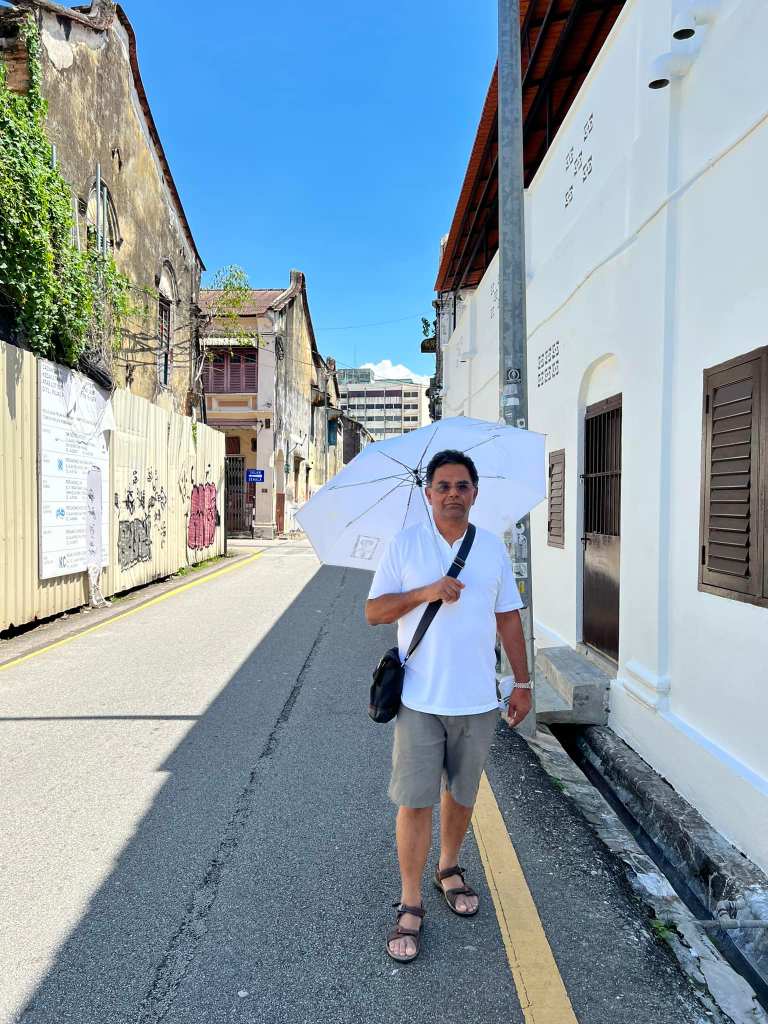
“Oh, yes! I don’t like it at all. It just hits me – feels like my brain is on fire,” I responded.
He didn’t call me a Philistine but clarified that he wasn’t talking about wasabi, the horse radish purée that complements sushi, but Wabi Sabi – the Japanese concept of beauty in impermanence, the acceptance of the transient nature of everything and elegance in imperfection. A completely new idea for me, a far cry from Singapore where every building resembles a wedding cake.

I studied the idea a little more and gave it serious thought. Somewhere along the way, this new concept altered the world around me. I began to see beauty despite the surface flaws, appreciate asymmetry, and respect the graceful aging of things. I started observing the patina on a wall as adding to its charm instead of wanting to give it a good scrub and a lick of paint. Above all, Wabi Sabi added a temporal elasticity to everything around and within me – both physical constructions and metaphysical abstractions like human relationships. It added a new dimension to my perception, a living continuum instead of a dead stillness. I changed a little.
 gopistory.com