Over the years, I’ve realised that stately homes and mansions hold little appeal for me. Where someone slept, cooked, or entertained simply doesn’t interest me. Plush Persian carpets, silver cutlery, and crystal glassware do nothing – except perhaps stir a faint twinge of envy.
So, when told that we were visiting the “Maison de Pierre Loti” in Rochefort, about 70 km south of Luçon, my first reaction was not delight but a fake “Nice.” Pierre Loti, the darling of Rochefort, was the nom de plume of Julien Viaud (1850–1923), a French naval officer, novelist, and travel writer known for his exotic, romanticised depictions of foreign lands.
When my host returned from his laptop looking crestfallen and announced that all entry tickets were booked until the end of August, I had to work hard to match his disappointment. “What a pity,” I said, summoning an appropriate drop of the lower jaw, while internally smiling in relief. I really should’ve gone into acting.
Envy in one paragraph, fraudulent behaviour in the next two – I’m not exactly painting myself in a flattering light, am I?
We travelled to Rochefort and found lunch in a modest bistro. While the others tucked into hearty meat dishes, I was faced with a goat cheese salad. I do have a weakness for cheese, but goat cheese remains an outlier. It’s one of those strange substances which though mostly odourless, tastes like the smell of a goat. It conjures the unmistakable presence of a goat—perhaps under the table, or lurking just behind the chair. With no other vegetarian options, I ate my salad while trying hard not to think of goat – a difficult feat, given one seemed to be right there with me in the room.
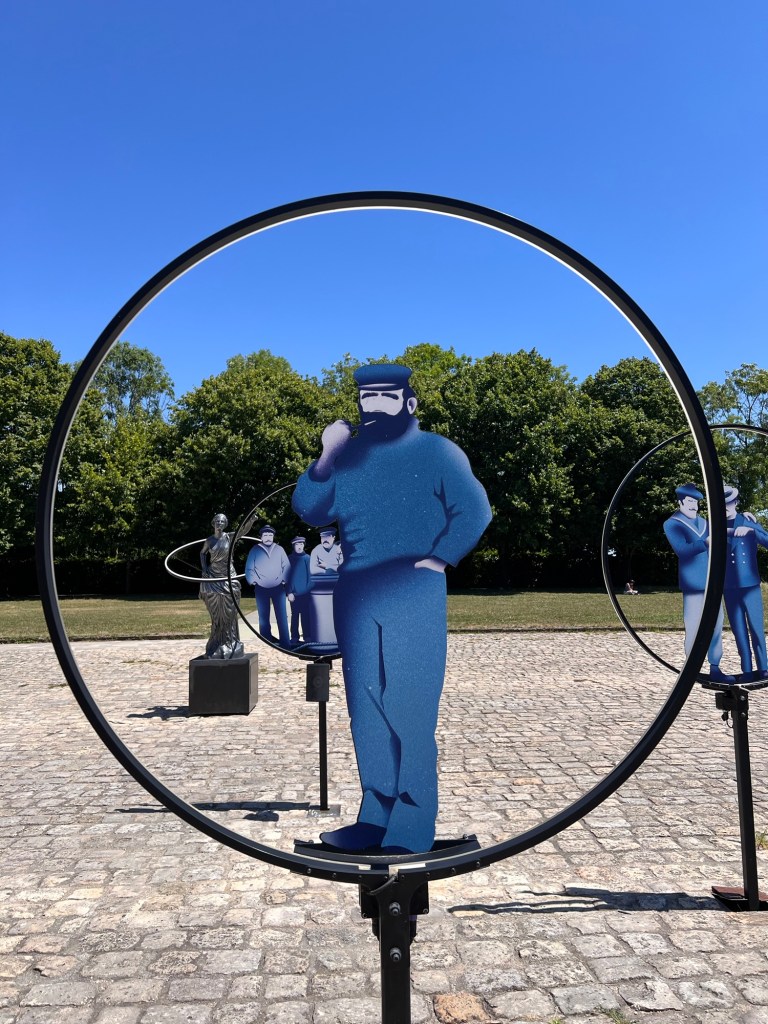
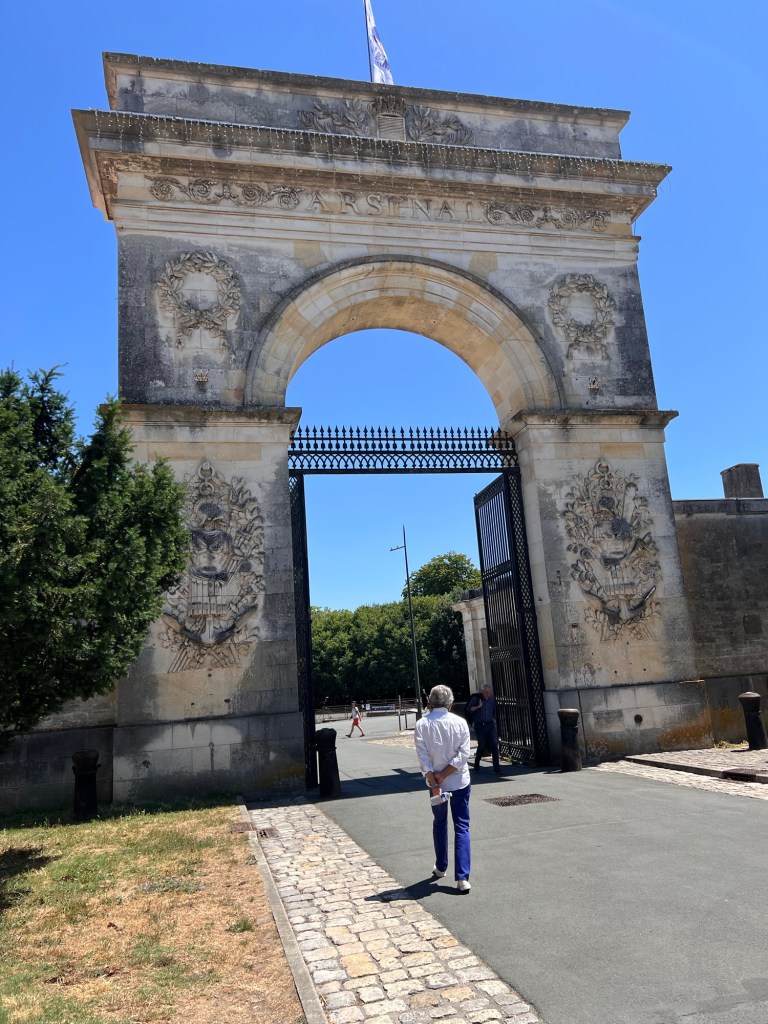
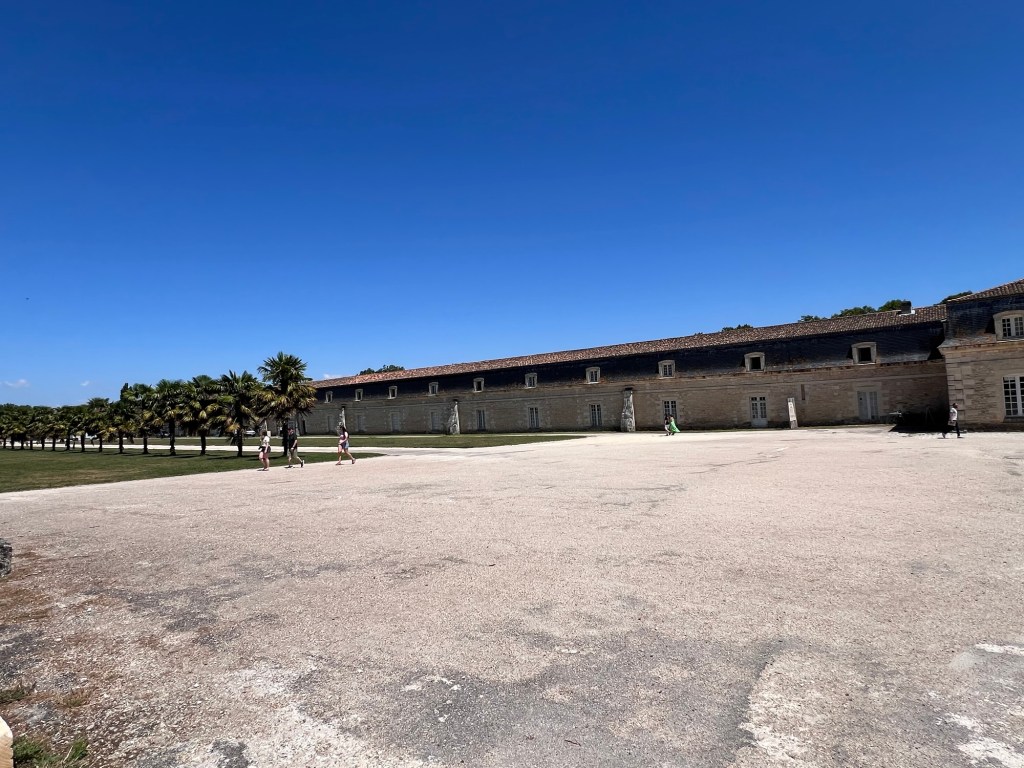
Next stop: a museum. Where else? Two art historians and an archaeologist were in charge of the programme. Fortunately, the Arsenal de Rochefort proved interesting. The pre-Revolution naval base, built on the orders of Louis XIV in 1666, and set beside an estuary, includes a 374-metre-long rope-making factory – the longest building I’ve ever seen. Metal cutout figures of Captain Haddock, Tintin, and other nautical figures welcomed us in the courtyard.
We then visited the Musée Hèbre, which turned out to be a revelation. It houses a fascinating collection of Aboriginal art from Australia and artefacts of ethnographic interest from across the Pacific islands. In that section of the museum I felt like I was peering into another world. One object, a ‘pahu’ drum from French Polynesia, oddly reminded me of the long cylinder liner of a two-stroke marine engine complete with exhaust ports.
As it happens, the Musée Hèbre also coordinates visits to the house of Pierre Loti. We casually mentioned we hadn’t managed to get tickets – and were informed that due to cancellations six places had opened up for the 16:30 tour.
I feigned, once again, an exclamation of delight. But as it turned out, my concerns had been misplaced… (continued).
 gopistory.com
Leave a comment