– continuation of Rochefort and conclusion –
My earlier post on Rochefort ended just before our visit to the house of Pierre Loti, the most famous citizen of the city. The house was under renovation for 10 years and had only opened in June 2025. Who was Pierre Loti, and why do I feel compelled to write about him?


I will answer the second question first. Loti travelled the world on ships as a naval officer, wrote extensively on the places and people he visited, and brought back exquisite artefacts from each of these places. As we were guided through his house, which was crammed full of these objects, I couldn’t help finding some parallels with him in my own career. I too was lucky to visit exotic places around the world during my seafaring career; I wrote about the places I visited, but only in letters to my wife (then girlfriend) and my parents. Loti was elected to the Académie Française in 1891, in recognition of his literary talent. OK, that’s where the parallels end. I wasn’t even elected to our college mess committee! Nevertheless, I felt a certain kinship with the man.
I haven’t read any of his works, having only become aware of him during my recent visit to his city. But I understood the close affinity he developed for the people of the countries he visited. Those were different days. Loti lived between 1850 and 1923. I was born more than a hundred years after him. His naval vessels stayed in ports for months at a time. Mine – vessels of the merchant navy – stayed 10 days if we were lucky, and often only a day or two.
Loti was once threatened with dismissal from the French Navy for publishing a series of articles in Le Figaro about the atrocities committed by the French in North Vietnam – just the type of man I admire.
I could empathise with Loti for wanting to become one with the locals, adopting their customs and sartorial habits. I too went ‘native’ when I visited foreign countries, often travelling by the local bus, visiting places of religious interest, and conversing with the locals in mime or whatever smattering of the local language I had picked up.
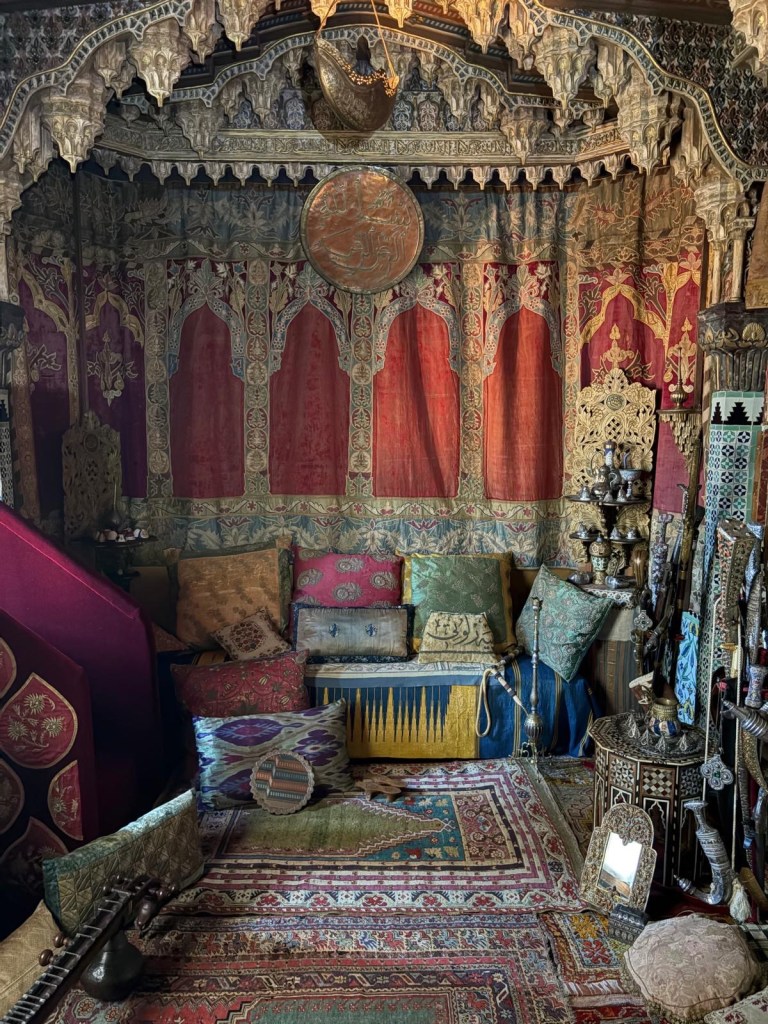
Loti, like me, didn’t practise any religion. But he was fascinated by Islam, and one of the rooms in his house had a veritable mosque in it, complete with a mihrab. I sometimes pine to hear the melodious azan, the call to prayer from the mosque. It reminds me of my childhood in India, when religion was not practised on the streets as it is today. I’m often enthralled by the weird and wonderful rituals practised by people of all religions. I have visited synagogues, churches and mosques; Tao and Shinto temples; Buddhist, Jain, and Zoroastrian places of worship. I love to visit ancient Hindu temples, more for their architecture than for the gods they house.
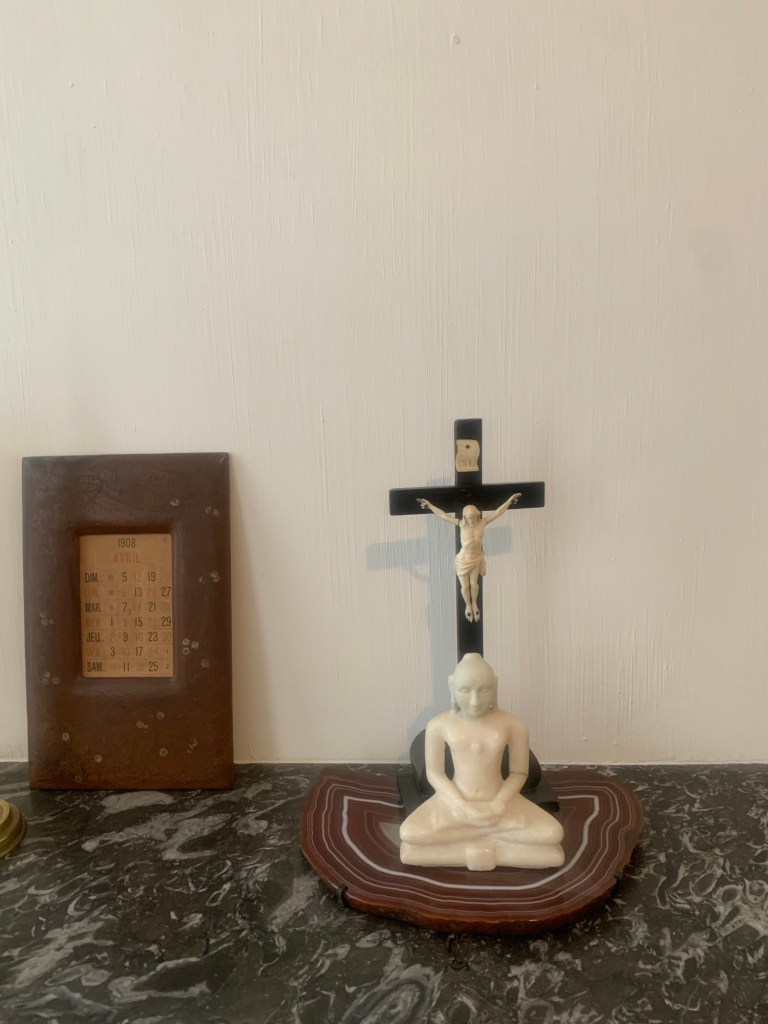
I won’t describe the rooms in Loti’s house but will refer you to the photographs included with this post. The experience of peeping into his life left me with the same feelings I had when we visited the Clive Museum (of Loot) in Powys, Wales. Although I had no claim to Tipu Sultan’s sword or the jewel-studded tiger-head finial of his throne, I somehow felt the objects belonged more to me than to Clive. Similarly, looking at the objects in Loti’s house, I couldn’t help but feel that I too had a claim to the places he visited – I shared his intuitive sense of camaraderie with the locals.
 gopistory.com
Leave a comment