The rain was relentless, non-stop, as if it were a permanent state of weather. Yet, the roads remained well drained allowing us to continue our discovery unhindered. We were the only tourists probably because of the rain but also because Jaffna is not on the average tourist’s itinerary. I am surprised it is not, considering its history, both recent and distant.
The Nallur Kandaswamy Kovil, originally built in 982 AD, destroyed by the Portuguese Taliban, sorry colonialists, and rebuilt in 1732, was our first stop. I went there not to pray to Murugan son of Siva, but because it was the site where Thileepan, a Tamil Tiger fasted to death for the Tamil cause. There’s no shrine to him, at least none that found its place in the annals of the tourism department. Everyone in Jaffna wants to forget the civil war, and that can only be a good thing.
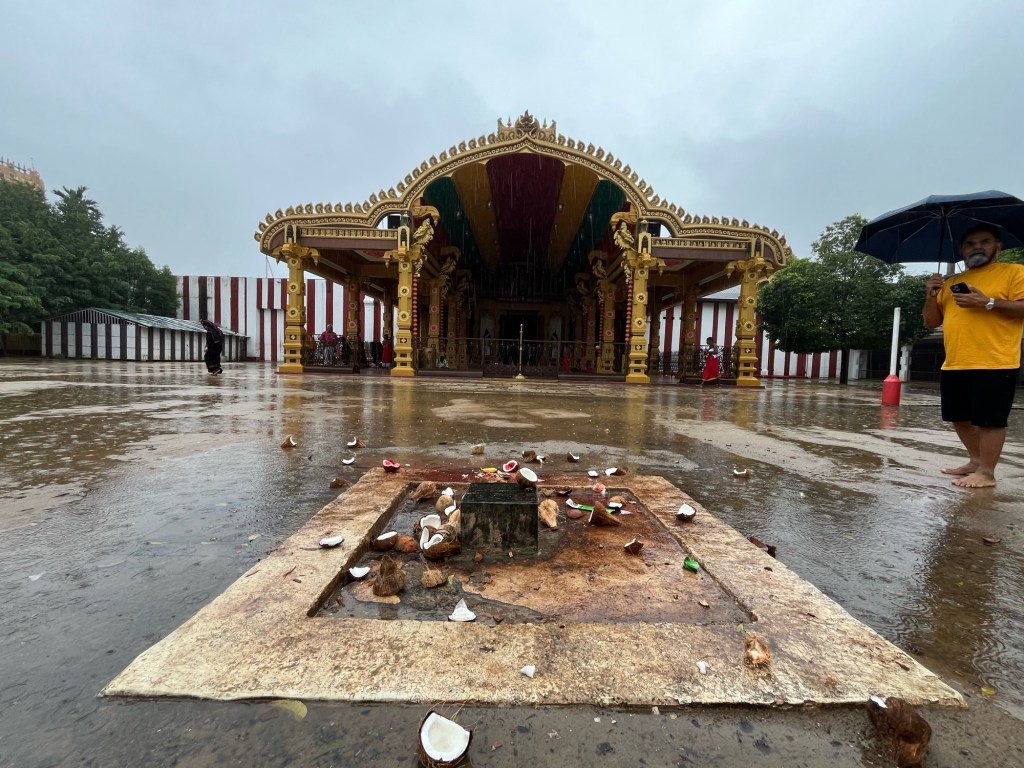
Shorts were not permitted inside the temple and neither were upper body garments. One had to cover the knees and bare the chest (this is a restriction only for men, so don’t get excited – the lascivious amongst you – this is a temple to God not a nudist beach). Fortunately, a shop outside lent vethis (a type of sarong) to the devout free of charge. I draped it over my shorts and played the part. Smearing my body with holy ash, I emulated the devotees who milled around chanting Oom and folding hands in complete supplication to the gods. Even though I had lost my faith as a child, I would be lying if I said I didn’t experience a sense of wellbeing inside the temple, perhaps vicariously, but experience something I did, however briefly.

We headed to Point Perdro, Sri Lanka’s northernmost point. The rain and wind lashed and howled turning umbrellas inside out and defeating the waterproof guarantee of my shoes. The sea raged on, roaring and frothing as if not wishing to be outdone by the the rain. In compensation, we had the whole place to ourselves and enjoyed, rather perversely, not having to vie with tourists for selfies at vantage points. Point Pedro was ours alone. And I did experience that sense of awe and reverence once again, this time by the overwhelming power of nature on display.
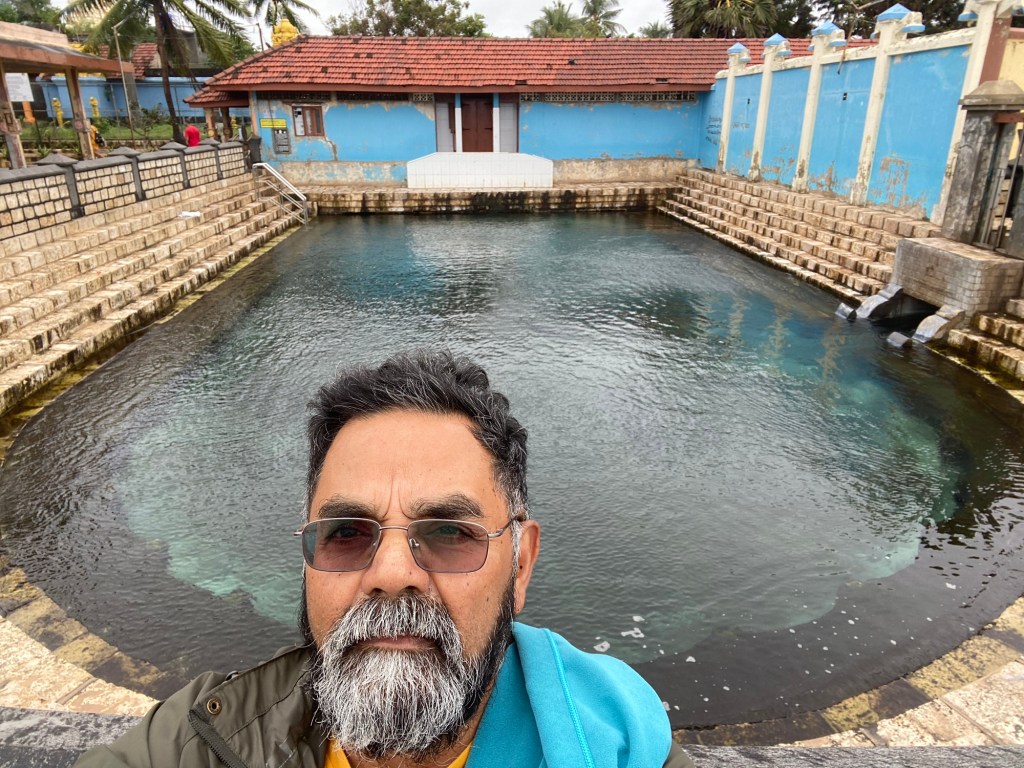
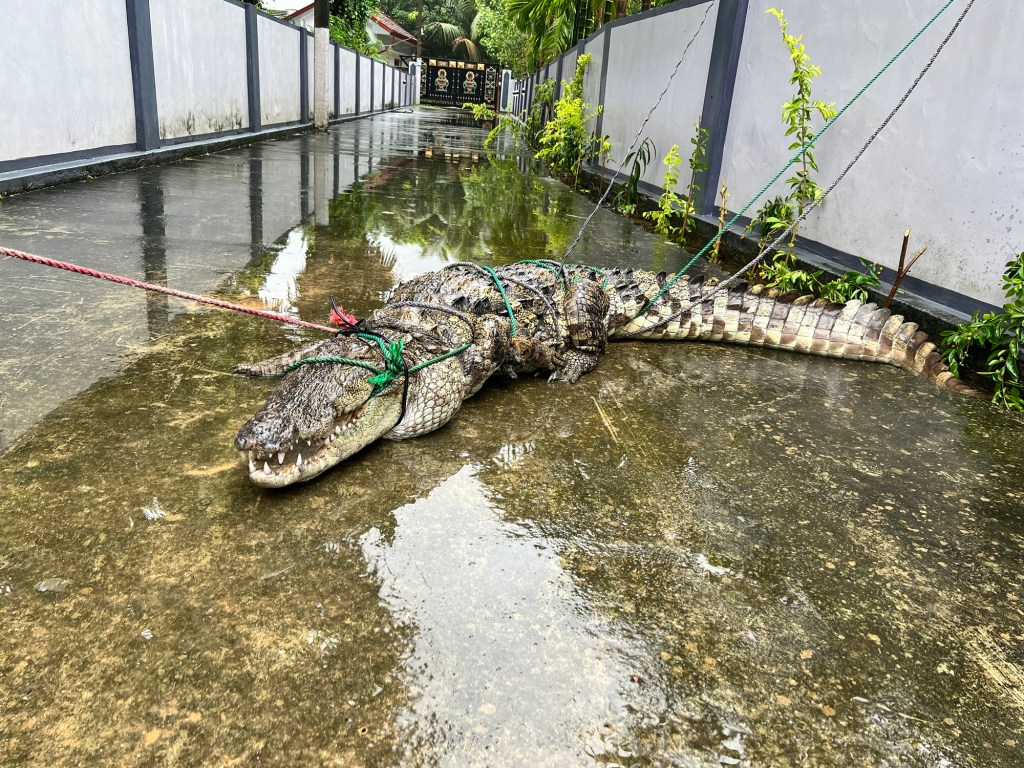
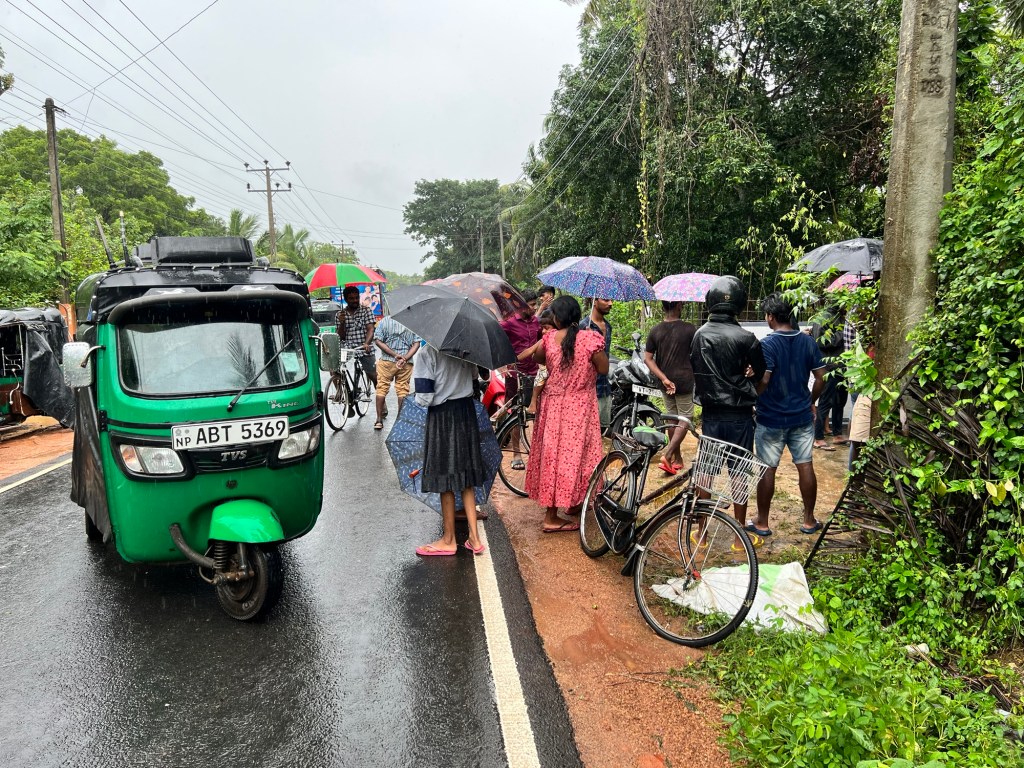
Keerimalai was the next stop. A ‘bottomless well of fresh water springs’, it is the place which cures ailments if you immerse yourself in the pristine water right next to the sea. On our way there, we saw a crocodile on the road. It had strayed out of the river and was captured by the villagers. It lay there defeated while a crowd gathered in front of our eyes. People, all instant reporters, spread the news with their phones. Tuktuks, multicoloured umbrellas and toddlers firmly deposited on parents’ shoulders jostled with each other to catch a glimpse of the poor creature. I resisted an urge to pat the helpless animal and whisper some comforting words. The last thing I wished for was a selfie with a tethered crocodile. It must have sensed my empathy for it blinked and moved its tail in response.
Kankesanturai port was our original destination in Jaffna district when we planned to travel here from India by ferry. However, the monsoon season put an end to those plans. We reached there eventually by road. The rain stopped briefly as we were finishing lunch. It was as if the gods had relented a bit for our benefit. We could actually go outside without raincoats and look across Palk Strait in the direction of Thanjavur in Tamil Nadu, India.

We continued to Dambakola Patuna where a sapling of the bodhi tree beneath which Siddhartha Gautama achieved enlightenment to become the Buddha, was brought from India in 250 BCE. Theri Sanghamita, the sister of the bodhisattva who introduced Theravada Buddhism to Sri Lanka, transported the sapling in a boat or so the posters informed me and to reinforce it there was a model of the boat floating about in the area. Just standing near the tree, to partake the sheer spiritual and historical significance, I felt immensely privileged.

Our final stop was Jaffna Fort, built by the invading Portuguese stolen by the invading Dutch and stolen again by the invading British. It was handed back to the Sri Lankans in 1948. Despite all the invasions, the fort has bravely withstood the ravages of pillage, plunder and civil war. In that sense it has served a purpose and borne silent witness to centuries of colonial crime.

We were glad to be back in our dry accommodation but not before picking up a couple of beers which we drank to the background music of Hindustani classical music by Kumara Gandharva overlaid by the incessant croaking of frogs. The music we could switch off but not the frogs which kept up the din until dawn. It sounded like they were chanting Muruga Muruga Muruga or was it just my guilt manifesting itself for pretending to be a believer amongst those of true faith?
 gopistory.com
Leave a comment